Amazon's 3,000 Tata Electric Trucks: India's Freight Goes Electric
Amazon and Tata Motors have announced the largest electric-truck deployment by an e-commerce company in India: 3,000 electric trucks for Amazon's transportation network, rolled out over the next three years. The first batch — 20 Tata Ultra E.7 trucks — was flagged off in Delhi on 27 October 2026, with Union Heavy Industries Minister H. D. Kumaraswamy present at the launch.
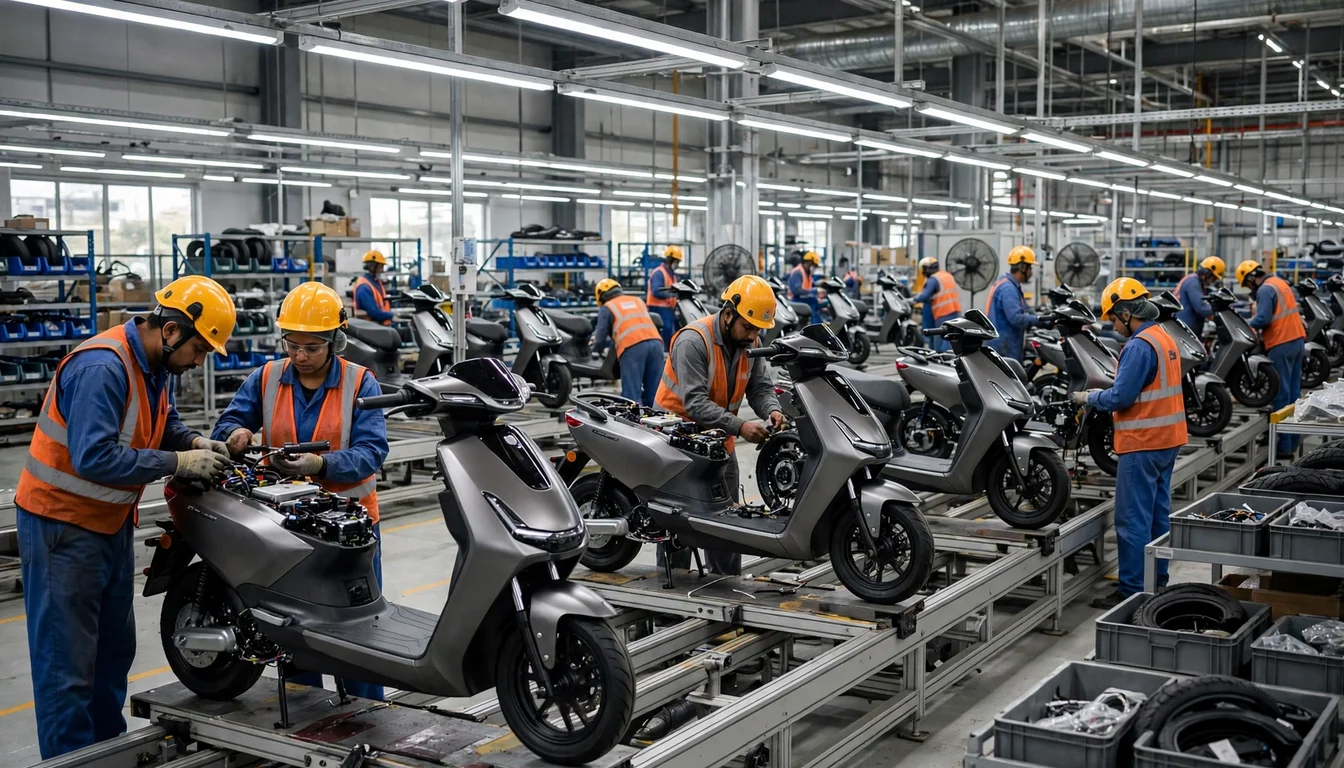
The short version: this is not another last-mile delivery announcement. Amazon already runs more than 15,000 electric vehicles across 500-plus Indian cities. This deal pushes electrification into the middle mile — the heavier, longer, schedule-critical legs between fulfilment centres, sorting hubs and cities — and eventually onto a proposed 2,800-km electric freight corridor linking Delhi, Bengaluru and Chennai along NH48. Tata Motors supplies the trucks; Amazon's carrier partners own and operate them.
What exactly was announced
The headline numbers are straightforward, and worth stating plainly because the rollout is phased rather than instant:
- Fleet size — 3,000 electric trucks: light- and medium-duty models from Tata Motors, deployed across Amazon's Indian transportation network over three years, not all at once.
- Starting point — Delhi, festive season: the first batch of 20 Tata Ultra E.7 trucks began operating in Delhi during the festive peak, when e-commerce shipment volumes are at their highest.
- Ownership model — carrier partners: Amazon is not buying the fleet itself. Its transportation service partners will own and operate the trucks, which matters because the economics have to work for small fleet owners, not just for Amazon.
- Beyond the vehicle — charging, service, support: Tata Motors says the collaboration covers charging infrastructure, servicing and operational support, not just truck supply. Charging partner Yahhvi already operates 10 charging yards for Amazon in India, and more are planned.
The political signal matters too. Kumaraswamy framed the deal as nationwide logistics demand met by trucks manufactured in India, and said government support will continue through PM E-DRIVE, PLI Auto and PLI ACC. Delhi's transport minister, Dr. Pankaj Kumar Singh, pointed to cleaner air in the capital as the payoff.
The truck doing the work: Tata Ultra E.7
The Ultra E.7 is a 7.5-tonne city and regional truck, and its spec sheet explains both why it fits this job and where its limits lie:
- Battery — 96 kWh LFP: lithium-iron-phosphate chemistry, chosen for cycle life and cost rather than maximum energy density.
- Power — 240 kW, 950 Nm peak torque: a permanent-magnet motor driving an integrated e-axle, which cuts driveline losses and maintenance points.
- Range — up to 180 km: enough for intracity runs and hub-to-hub legs, but not for a Delhi-to-Jaipur round trip without a charging stop.
- Charging — CCS2 DC fast charging, about 1.5 to 2 hours: a truck can recharge between shifts or during a hub dwell, which is how fleet schedules will absorb it.
- Payload — 3,100 kg with container: on a 14-foot deck, sized for parcels, FMCG and courier loads rather than bulk freight.
- Safety and comfort — crash-tested cabin, high-voltage safety systems, regenerative braking: the features that matter for drivers doing multi-shift urban duty.
Tata Motors' wider electric truck range fills in above the E.7. The Ultra E.12 offers 96 kWh or 147 kWh batteries with up to 200 km of range and 6,000–6,300 kg of payload, and Tata's Rajesh Kaul said the Amazon programme will expand across 9-tonne, 12-tonne and 19-tonne variants over time. That ladder is the real story: the E.7 proves the model in cities, and heavier trucks take it onto highways as charging matures.
The 2,800-km corridor is the ambition, not yet the reality
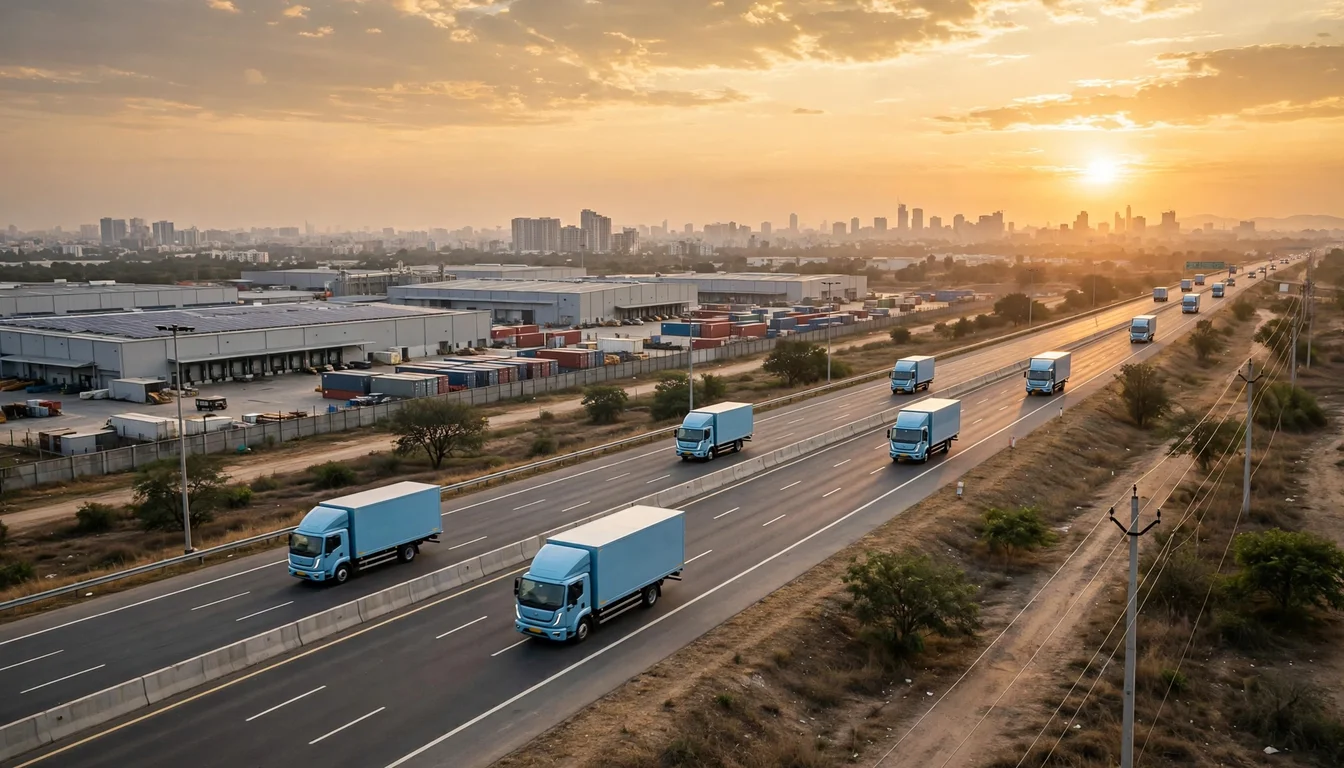
The most quoted line of the announcement is the plan to electrify the 2,800-km Delhi–Bengaluru–Chennai corridor along NH48, spanning seven states and linking six major e-commerce regions. Readers should treat this honestly: it is a stated ambition and a phased expansion target, not a finished charging network. What exists today is the starting infrastructure — Yahhvi's 10 charging yards — plus a pilot precedent: Amazon's Laneshift programme with C40 Cities already tested electric trucks on the Bengaluru–Chennai stretch and fed into a roadmap for zero-emission trucking in India.
Two things make the corridor more than a press-release line. First, Delhi's EV Policy 2026 gives the first 1,000 privately owned medium-duty electric trucks registered within three months of the policy's launch round-the-clock Delhi entry for 10 years, bypassing the usual no-entry hours. For a carrier partner, that exemption is a daily operating advantage, not a subsidy on paper. Second, the trucks are being deployed into live, high-volume freight demand rather than a demo route — the corridor will be built where the freight already flows.
Why middle-mile electrification is the hard part
Last-mile electrification in India is largely a solved playbook: small vehicles, short routes, overnight depot charging. Amazon itself is proof — it set out to deploy 10,000 electric vehicles in India by 2025 and hit that target a year early; it now operates over 15,000 EVs in the country. Middle-mile is harder on every axis: heavier loads, longer legs, tighter delivery windows, and drivers who cannot afford a truck sitting at a charger during peak hours.
That is why the total-cost-of-ownership argument, not the green argument, will decide whether this scales. Kaul's own framing is telling: "Electric trucking in India is moving beyond the pilot stage and entering a phase of wider adoption. With deep localisation driving affordability and a compelling total cost of ownership, zero-emission trucks are becoming a practical business proposition." Energy costs per kilometre, maintenance savings from fewer moving parts, and utilisation — how many paid kilometres a truck covers per day — are the three numbers carrier partners will watch. No purchase price for this fleet deal has been disclosed, so any article quoting a per-truck price for the Amazon order would be guessing.
The demand backdrop helps. During Navratri 2026, EV retail sales in India rose 26.78% year on year to about 1.17 lakh units, taking EVs to roughly 10.5% of all vehicle retails. Freight electrification is arriving just as Indian buyers, across segments, are switching on economics rather than novelty.
What to watch next
Three milestones will show whether this announcement becomes a transformation or a headline. First, the pace of deployment: 3,000 trucks over three years means roughly 1,000 a year, and the mix matters — if heavier 12- and 19-tonne trucks appear on intercity routes, the corridor is real. Second, charging uptime along NH48: highway fast chargers for trucks are a different engineering problem from city depots, and Yahhvi's yard count is the number to track. Third, carrier-partner economics in the open: resale values, financing terms and real-world energy costs per kilometre will determine whether other fleet owners follow Amazon's partners or wait. Amazon's own target — net-zero carbon by 2040 — gives the programme a long runway, but the next 12 months of operating data will say more than the launch event did.
Frequently Asked Questions
How many electric trucks will Amazon deploy in India?
Amazon and Tata Motors will deploy 3,000 electric trucks across Amazon's Indian transportation network over three years. The first batch of 20 Tata Ultra E.7 trucks was flagged off in Delhi on 27 October 2026, with the rollout starting in intracity operations and expanding to major freight corridors.
What is the range of the Tata Ultra E.7?
The Tata Ultra E.7 offers up to 180 km of range on a full charge from its 96 kWh LFP battery pack. It supports CCS2 DC fast charging, taking about 1.5 to 2 hours, and carries up to 3,100 kg of payload on a 14-foot deck, with a 7,500 kg gross vehicle weight.
What is the Delhi–Bengaluru–Chennai electric freight corridor?
It is a proposed 2,800-km electric freight corridor along NH48 connecting Delhi, Bengaluru and Chennai, spanning seven states and six major e-commerce regions. It is a phased ambition rather than a finished network: charging infrastructure is being developed with Yahhvi, which already operates 10 charging yards for Amazon in India.
How many electric vehicles does Amazon already operate in India?
Amazon operates more than 15,000 electric vehicles across over 500 cities in India. The company had aimed to deploy 10,000 EVs by 2025 and achieved that target a year early. The 3,000-truck programme extends that electrification from last-mile delivery into middle-mile and intercity freight.
Will electric trucks cost fleet operators less than diesel trucks?
No purchase price has been disclosed for the Amazon fleet deal, so a precise per-kilometre saving cannot be stated honestly. The savings case rests on three factors: lower energy cost per kilometre than diesel, lower maintenance from fewer moving parts and regenerative braking, and high daily utilisation. Fleet operators should compare total cost per kilometre — including charging downtime — rather than the sticker price, and watch real-world operating data from the first Amazon carrier partners before committing.
People also search for
- amazon tata electric trucks india
- tata ultra e.7 price range
- tata ultra e.7 specifications
- electric trucks india
- delhi ev policy 2026 electric trucks
- nh48 delhi bengaluru chennai freight corridor
- amazon electric vehicles india 15000
- tata motors electric truck models india
Sources & References
- HT Auto — Amazon to deploy 3,000 Tata electric trucks across India, targets major freight corridors: https://auto.hindustantimes.com/auto/news/amazon-to-deploy-3-000-tata-electric-trucks-across-india-targets-major-freight-corridors-41793092807043.html
- ITLN — Amazon to deploy 3,000 Tata electric trucks across India: https://www.itln.in/logistics/amazon-to-deploy-3000-tata-electric-trucks-across-india-1361066
- Autocar Professional — Tata Motors, Amazon Partner to Deploy 3,000 Electric Trucks: https://www.autocarpro.in/news/tata-motors-amazon-partner-to-deploy-3000-electric-trucks-135493?amp=1
- NDTV Profit — India's Biggest E-Com EV Bet: Amazon, Tata Motors Partner To Deploy 3,000 Electric Trucks: https://www.ndtvprofit.com/business/india-s-biggest-e-com-ev-bet-amazon-tata-motors-partner-to-deploy-3-000-electric-trucks-12244887
- Trucks CarDekho — Tata Ultra E.7 specifications: https://trucks.cardekho.com/en/trucks/tata/ultra-e-7/specifications
- Tata Motors — Ultra range brochure: https://trucks.tatamotors.com/assets/trucks/files/brochures/2026-01/ultra-range0.pdf?VersionId=Av8K4MFhAP.FTybX9hMJ6GFaBcz8Rnz