Euler-Jio-bp Opens 7,000 Chargers for Commercial EVs in India
On 28 October 2026, Euler Motors plugged Jio-bp pulse's charging network directly into its own app. For a commercial EV fleet operator, that one integration removes a daily friction: drivers no longer need to juggle a second app, a second wallet and a second payment to charge on the road. They can find a Jio-bp charger, check whether it is free, see the tariff, book a slot, and start and stop the session from inside the Euler platform.
The short version: the deal adds more than 7,000 Jio-bp charge points across over 1,100 locations in more than 300 cities to Euler's charging footprint, including DC fast chargers from 60 kW up to 480 kW and a claimed network uptime of 96%. It also brings Autocharge, so a session can start automatically the moment the DC gun is connected, with no app tap or card swipe at the charger. For fleets, the value is not the headline charger count — it is fewer missed deliveries, less driver downtime and one bill instead of many.
What exactly changed on 28 October
The announcement is an app integration, not a new charger build-out, and it is worth being precise about what is new:
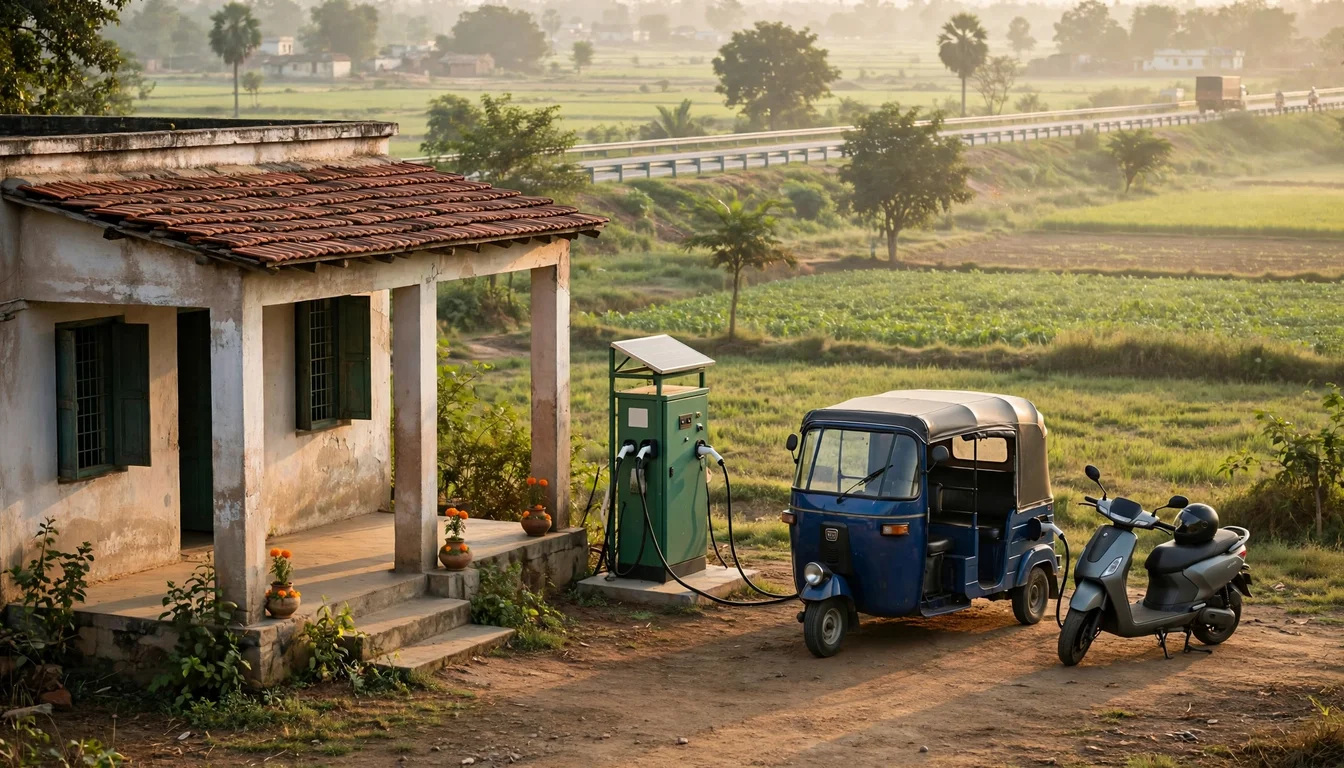
- Network size — 7,000-plus charge points: Jio-bp pulse charge points across more than 1,100 locations in over 300 cities are now discoverable and usable from the Euler app. Many sites sit on national highways and in urban centres, which matches how commercial vehicles actually run: city drops by day, highway legs between hubs.
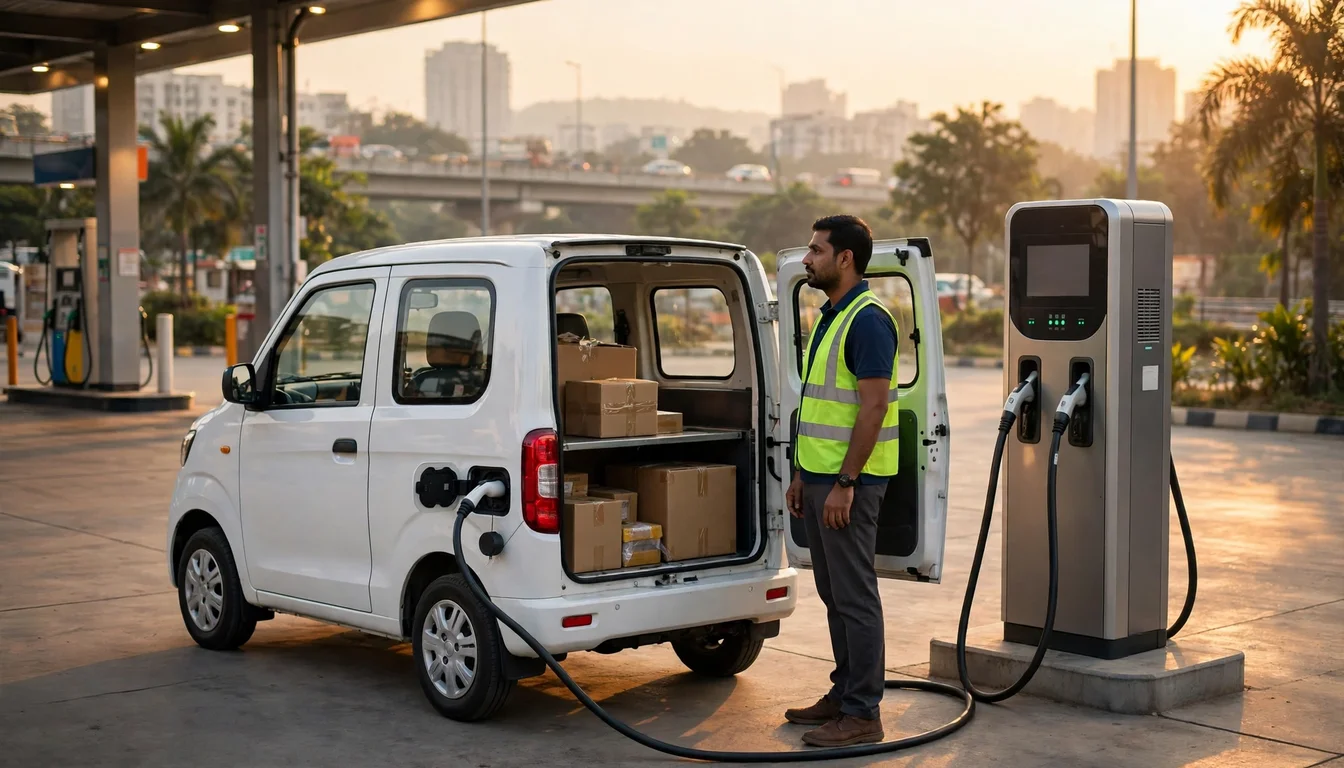
- One app, end to end: Euler fleet operators and drivers can view charger locations, check real-time availability and tariffs, book a slot, and start or stop a charging session without leaving the Euler application or managing a separate payment.
- Autocharge: once a vehicle is enrolled, a charging session can begin automatically when the DC charging gun is connected. The charger recognises the vehicle, authorises it and bills the linked account in the background.
- Charger power — 60 kW to 480 kW DC: the network spans ordinary fast chargers up to India's first 480 kW charger. That top figure matters for future cars, buses and trucks; a small commercial three-wheeler will still charge only as fast as its own onboard limits allow, so 480 kW is a network capability, not a promise for every vehicle.
- Uptime claim — 96%: Jio-bp reports 96% network uptime. Read that as a network average, not a guarantee for any single charger on any single day — a fleet manager should still check live availability in the app before dispatching a driver to a specific site.
- Partnership history: the integration deepens a partnership the two companies formalised earlier in 2026 to expand charging infrastructure for commercial EVs, including at high-demand logistics hubs. Jio-bp is the operating brand of Reliance BP Mobility, a joint venture of Reliance Industries and bp.
This is Jio-bp's second major app integration in a fortnight, after Kia India integrated the same network into its MyKia app on 16 October and Hyundai added it to myHyundai. Euler is the first aimed squarely at commercial fleets rather than private car buyers.
Why this matters more for fleets than for private drivers
A private driver who cannot find a charger loses an hour. A fleet driver who cannot find one loses a delivery slot, and an operator with twenty vehicles loses a day's revenue. Commercial EVs live or die on three constraints, and this integration touches all three:
- Where to charge: a driver on a fixed route cannot detour 10 km to hunt for a working charger. In-app discovery with live availability and slot booking turns charging into a planned stop rather than a gamble.
- Whether the charger works: a 96% uptime claim still means roughly one failed visit in twenty-five, which is why live status and booking matter more than the average.
- How fast the vehicle gets back on the road: Autocharge removes the app-opening, QR-scanning and payment steps at the charger. Across a fleet doing hundreds of charges a week, those saved minutes add up to whole driver-days.
There is a second, quieter benefit: one payment trail. When drivers pay across five networks with five wallets, reconciling charging spend per vehicle per route is manual work. When sessions run through the Euler app, the operator gets a single record of where, when and how much each vehicle charged — the raw material for working out true cost per kilometre.
How a fleet driver actually uses it
In practice, the workflow the companies describe runs like this:
- Find: open the Euler app and search for Jio-bp pulse chargers near the route, filtering by location rather than by network.
- Check: confirm the charger is online and free right now, and see the applicable tariff before driving there.
- Book: reserve a slot where booking is offered, so the driver is not queuing behind another vehicle on arrival.
- Charge: plug in the DC gun. With Autocharge enrolled, the session starts automatically; without it, the driver starts and stops the session from the app.
- Pay and move on: payment is handled through the Euler platform, with no separate Jio-bp wallet to top up.
One honest caveat: Autocharge is not universal. It works by recognising a registered vehicle when it plugs in — typically via the vehicle's identifier over the CCS connection — and it needs a one-time enrolment first. It is also network-specific: enrolling on one network does not enrol the vehicle on another. Enrol vehicles before they are dispatched on long routes, not at the first highway charger.
The numbers that decide whether fleets save money
No Euler-specific tariff has been published for this integration, so any article quoting a single "Euler-Jio-bp price" would be guessing. What can be stated honestly is the range a fleet operator should budget against:
- Public DC fast charging in India typically costs around ₹18–25 per kWh: that is the going range across major networks, before any subscription or negotiated fleet rate.
- Jio-bp pulse subscription plans cut that rate for heavy users: its All India Pulse Lite plan is listed at ₹20.75 per kWh for 300 kWh over three months, and the Max plan at ₹20.25 per kWh for 600 kWh over five months. Older listings quoted a ₹24 per kWh walk-up tariff falling to ₹18.75 per kWh on Lite — a reminder to check the live tariff in the app on the day, because promotional and subscription rates change.
- Fleet rates are usually negotiated, not rack rates: Jio-bp's own fleet pages describe tailored pricing by consumption slab. A fleet running dozens of vehicles will almost certainly pay something different from a walk-up driver, and that negotiated rate — not the headline tariff — is what decides cost per kilometre.
- Depot charging is still cheaper than public charging: overnight depot or home charging on a commercial tariff will undercut any public fast-charging rate. The right mental model is depot first for the daily shift, public fast charging for the mid-shift top-up and the intercity leg — exactly the mix this integration is built for.
To put that in vehicle terms: Euler's HiLoad EV, a three-wheeled cargo vehicle, is listed from around ₹4.32 lakh with an ARAI-certified range of up to 170 km from a roughly 13 kWh battery, while the four-wheeled Storm EV starts at around ₹9 lakh with up to 200 km in its long-range form. A full public fast charge of a 13 kWh pack at ₹20 per kWh costs roughly ₹260 — but the real fleet cost is energy plus driver waiting time, which is why booking and Autocharge matter as much as the per-kWh price.
What to watch next
Three tests will show whether this becomes a genuine fleet tool: real-world uptime on the corridors fleets actually use, whether Euler extends single-app charging to other networks, and the negotiated fleet tariff that emerges in practice. One integration solves one network, not the whole map — but if its rates land well below walk-up prices, small fleet owners get a switching reason no subsidy can match.
Frequently Asked Questions
How does Jio-bp pulse charging work for Euler fleet drivers now?
Euler fleet operators and drivers use the Euler app to find Jio-bp pulse chargers, check real-time availability and tariffs, book a slot, and start and stop charging sessions. Payment runs through the Euler platform, so drivers do not need a separate Jio-bp app or wallet for these stations.
What is Autocharge and how does it work?
Autocharge lets a charging session start automatically when the DC gun is plugged in, with no app tap or RFID card at the charger. After a one-time enrolment linking the vehicle to an account, the charger recognises the vehicle on connection, authorises the session and bills the linked account in the background. It is network-specific, so enrolment on one network does not carry over to another.
How much does Jio-bp pulse charging cost per kWh?
Public DC fast charging in India typically costs around ₹18–25 per kWh. Jio-bp pulse lists subscription rates of ₹20.75 per kWh on its All India Pulse Lite plan (300 kWh over three months) and ₹20.25 per kWh on its Max plan (600 kWh over five months). Fleet operators can usually negotiate tailored slab pricing, so check the live tariff shown in the Euler app before charging.
How many Jio-bp pulse chargers are there in India?
The 28 October 2026 announcement puts the network at more than 7,000 charge points across over 1,100 locations in more than 300 cities, with DC fast chargers from 60 kW to 480 kW. Older Jio-bp pages listed 5,500-plus points, so the higher figure reflects network growth since those pages were written — use the 7,000-plus figure as the current announcement number.
Can any EV use this integration, or only Euler vehicles?
This integration lives inside the Euler app, so it is built for Euler fleet operators and drivers. Drivers of other brands can still use Jio-bp pulse chargers through the Jio-bp pulse app itself, or through other integrations such as Kia's K-Charge in the MyKia app and Hyundai's myHyundai app.
People also search for
- euler jio-bp charging network india
- jio-bp pulse charging cost per kwh
- jio-bp pulse charging stations near me
- ev charging roaming india
- ev charging cost per km india
- autocharge ev charging how it works
- euler hiload ev price range
- electric trucks india prices range
Sources & References
- Business Fortnight — Euler Motors adds Jio-bp charging network for commercial EV fleets: https://businessfortnight.com/euler-motors-integrates-jio-bp-charging-network-into-fleet-platform/
- TimesTech — Euler Motors Integrates Jio-bp Charging Network for EV Fleets: https://timestech.in/euler-motors-integrates-jio-bp-charging-network-for-ev-fleets/
- SMEStreet — Euler Motors, Jio-bp Streamline Commercial EV Charging: https://smestreet.in/sectors/euler-motors-jio-bp-streamline-commercial-ev-charging-12761634
- Jio-bp — Jio-bp pulse EV charging stations and fast charging: https://www.jiobp.com/products-and-services/EV-charging
- Driivz — What is Autocharge?: https://driivz.com/glossary/autocharge/
- EarthtronEV — How to Pay for EV Charging in India: Apps, UPI & Cost: https://www.earthtronev.com/how-do-you-pay-for-charging-an-electric-car-at-the-charging-stations/