TL;DR — the short answer
- A full EV battery pack replacement in India typically costs ₹15,000–₹22,000 per kWh of pack size in 2026. That puts a mainstream electric car (30–50 kWh) at roughly ₹4.5 lakh–₹9 lakh, installed.
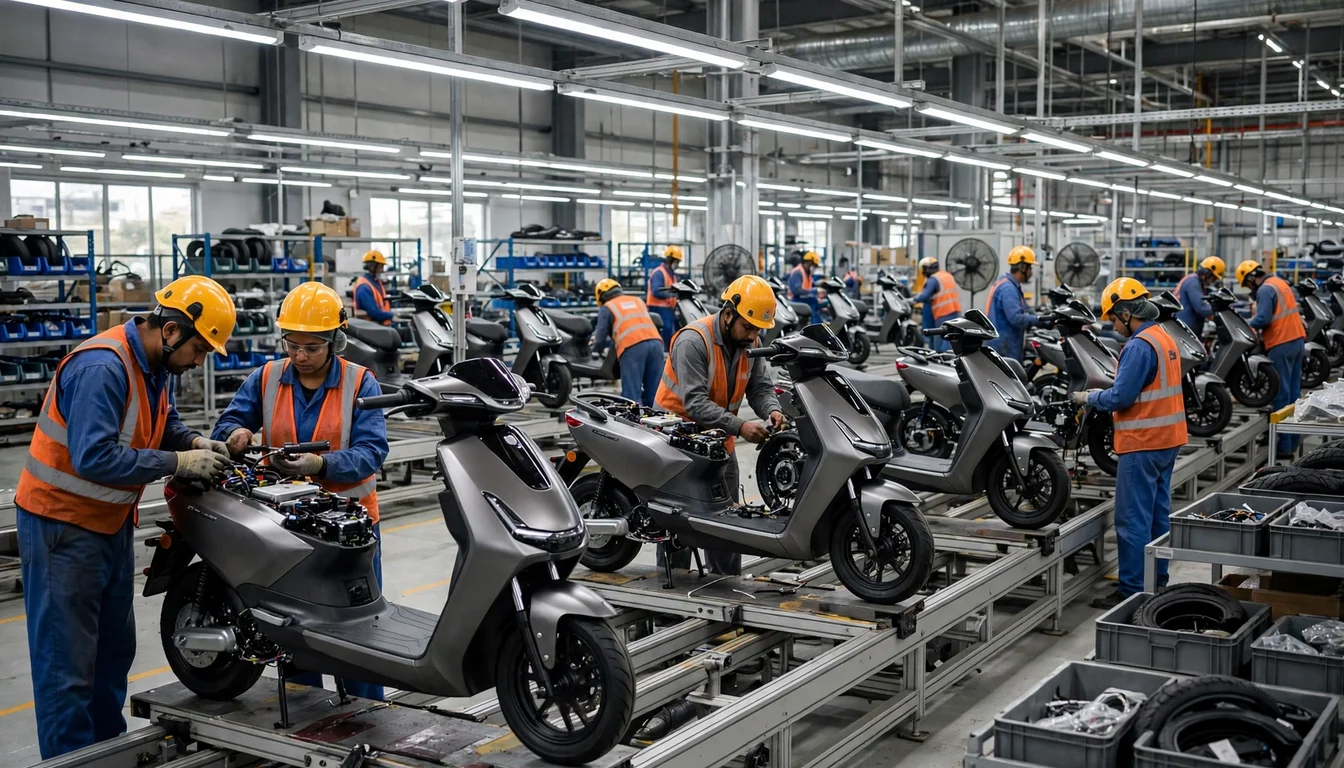
- Electric scooters are far cheaper: ₹32,000–₹65,000 for a genuine replacement pack, depending on the model.
- You will probably never pay this bill. Every mainstream EV sold in India carries an 8-year / 1,60,000 km battery warranty, and modern packs degrade slowly enough that most will still be serviceable 10–15 years in.
- When a fault does occur, manufacturers replace individual modules — not the whole pack — which cuts the bill dramatically. Always get a written, model-specific quote before believing a social-media scare number.
How much an EV battery replacement costs in India (2026)
Replacement cost scales almost directly with pack size, so the per-kWh rule is the fastest way to sanity-check any quote: ₹15,000 to ₹22,000 per kWh covers the pack, enclosure, battery management electronics, cooling hardware, labour, and taxes. Below are 2026 market estimates reported by Indian outlets — treat them as ranges, not price lists, and confirm with your manufacturer's authorised service centre.
- Tata Nexon EV 45 kWh (Long Range) — ₹5.5–₹9 lakh: India's best-selling electric SUV sits at the upper end of the mass-market bracket because of its large pack. The older 30 kWh variants are quoted closer to ₹3.5–₹4.5 lakh.
- Tata Punch EV (~35 kWh) — ₹3.1–₹3.5 lakh: LFP chemistry and a smaller pack keep this one moderate.
- Tata Tiago EV (~24 kWh) — ₹2.2–₹2.5 lakh: the cheapest car-pack replacement among mainstream models.
- MG ZS EV (44.5–50.3 kWh) — ₹5.2–₹8.5 lakh: LFP pack, similar bracket to the Nexon EV.
- Hyundai Ioniq 5 and similar premium EVs — ₹10.5–₹18 lakh+: 72+ kWh packs and NMC chemistry push premium replacements into a different league.
- Ola S1 Pro (4 kWh) — ₹42,000–₹48,000; Ather 450X (3.7 kWh) — ₹40,000–₹45,000; TVS iQube (3.04 kWh) — ₹34,000–₹38,000; Bajaj Chetak (2.9 kWh) — ₹33,000–₹37,000.
Two scooter data points from real owner workshops this month are worth knowing: a genuine TVS iQube battery pack carries an MRP of ₹34,077 including all taxes (label on the shipping box, manufactured 09/2026), while third-party scooter battery replacements in local repair shops are advertised around ₹7,200–₹7,500 — cheaper, but with no OEM warranty backing.
Why the bill is so high: pack price vs installed price
A battery is the engine and fuel tank of an EV combined — typically 30–50% of the vehicle's total cost. But the number people quote on social media (often "₹99 per kWh × 60 kWh = ₹5,940") is the cell commodity cost, not your replacement bill.
Your actual bill includes the pack enclosure, hundreds of cells, cooling hardware, high-voltage connectors, contactors, sensors, the battery management system, shipping, diagnostics, pack removal and installation, software configuration, testing, dealer overhead, and GST. That stack is why a 45 kWh Nexon EV pack costs ₹5.5–₹9 lakh installed even though the cells inside are worth far less. Anyone quoting you a bare cell-price multiplication is misleading you.
The warranty is your real protection
Almost every EV sold in India today covers the high-voltage battery for 8 years or 1,60,000 km, whichever comes first. This is the single most important number in this entire article — a ₹7 lakh replacement cost only matters if you pay it, and the warranty means you almost certainly will not within a normal ownership cycle.
Key warranty facts, from Tata Motors' official warranty terms:
- The warranty triggers on capacity loss, not just total failure: if the pack's State of Health (SOH) drops below 70% within the warranty period, Tata repairs or replaces it to restore at least 80% SOH.
- Exclusions are real: physical damage, flooding, fire from external causes, unauthorised modifications, and damage from third-party chargers are not covered.
- Tata has also run limited-period "Lifetime" HV battery warranty offers on select models (including the Nexon EV 45 kWh) for first owners — if your purchase included one, the battery anxiety question is effectively moot. Check your warranty card, not the brochure.
Will you actually need a replacement?
Probably not — and this is where engineering data beats anxiety. Modern lithium-ion packs, especially the LFP chemistry used by Tata and MG in mass-market models, degrade roughly 1.5–2.5% of capacity per year under normal use. Do the maths: after 8 years, a well-maintained pack sits at roughly 80–88% of original capacity, comfortably above the 70% warranty threshold. Most packs will remain usable for 10–15 years or 2–3 lakh km before the range loss becomes genuinely annoying — like a phone battery that fades slowly rather than dying overnight.
What actually decides your pack's lifespan:
- Charge gently most of the time: regular AC home charging is far kinder than daily DC fast charging. Use fast charging for road trips, not as a daily habit.
- Mind the heat: India is harsh on batteries. Park in shade where possible; liquid-cooled packs (Tata, MG, Hyundai) handle this much better than air-cooled ones.
- Avoid deep discharges: keeping the pack between roughly 20% and 80% for daily use extends cycle life measurably.
- Follow the service schedule at authorised centres and use authorised charging equipment — warranty validity depends on it.
Module repair, not pack replacement
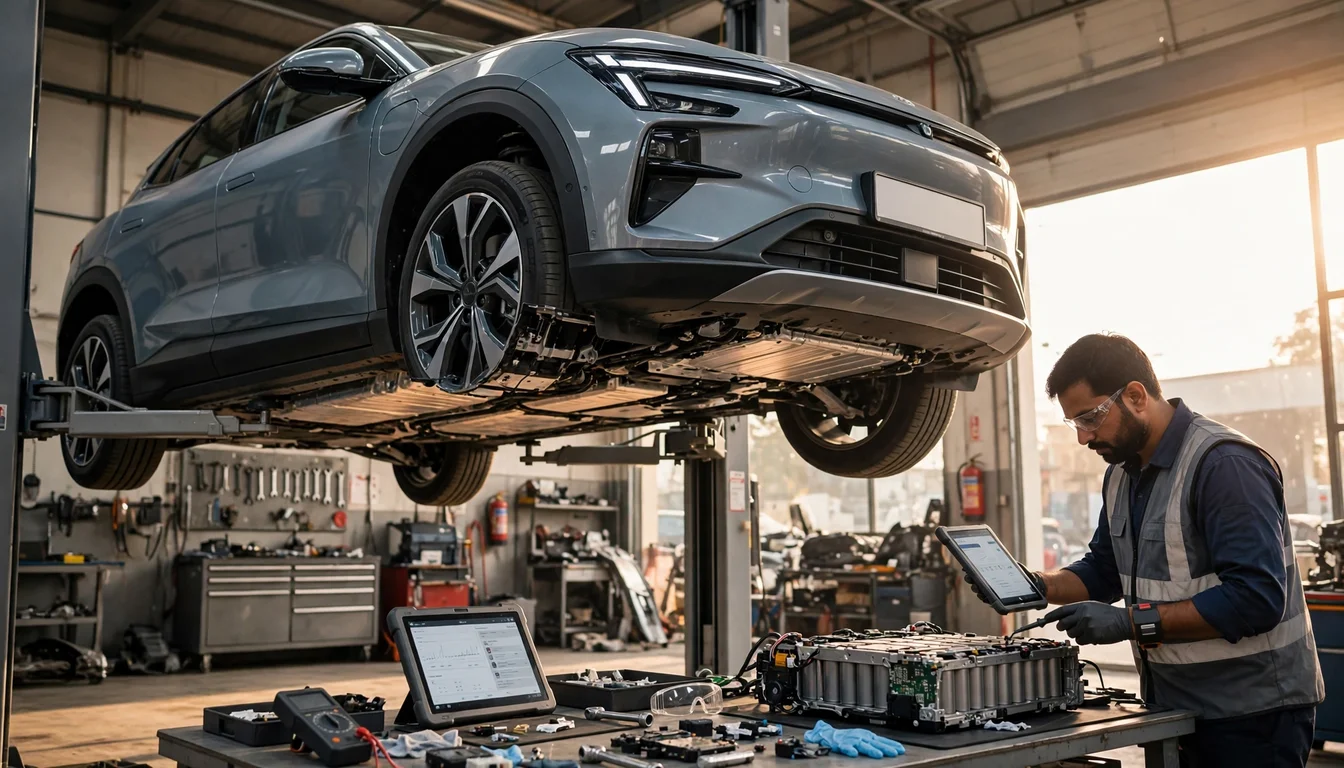
Full pack replacement is the headline number, but it is rare. In practice, when a battery develops a fault, manufacturers diagnose and replace the defective modules or cells inside the pack. Since a pack contains multiple modules, swapping one faulty module costs a fraction of a full replacement. The battery management system also isolates problems early, preventing small faults from becoming pack-level failures.
This distinction matters most for second-hand EV buyers: a used EV with one degraded module is a repairable car, not a scrap car. Ask the seller for a battery health report (any authorised service centre can pull SOH data) before buying.
One caution: third-party battery packs and "refurbished" modules are flooding local markets at tempting prices (₹7,200 scooter batteries, for instance). They carry no OEM warranty, no certified thermal safety testing, and using one can void your vehicle's remaining warranty. For a component this safety-critical, that saving is not worth the risk.
What insurance does and does not cover
Standard comprehensive car insurance in India does not cover battery replacement for wear, tear, or gradual degradation — that is classified as consequential damage. It does cover battery damage from accidents, fire, or flooding under the own-damage section.
For EVs specifically, look for add-ons: zero-depreciation (bumper-to-bumper) cover and, where offered, battery-specific protection add-ons. Given that a single EV part can cost lakhs, zero-dep is arguably more important on an EV than on a petrol car. Premiums are slightly higher, but the maths is obvious against a ₹5 lakh part.
The ownership verdict
EVs save you ₹3–5 per km in running costs versus petrol (home charging versus ~₹100/litre fuel), and the battery — the feared expense — is the one part most protected by warranty. The buyer who genuinely needs to worry is the one buying a 10-year-old used EV with no warranty left, or the fleet operator running 2 lakh km a year. For everyone else, the ₹5–₹9 lakh number is a tail risk, not an expected cost. Price it into your thinking, insure against the accident cases, and let the warranty do its job.
Frequently Asked Questions
How much does it cost to replace an EV battery in India?
In 2026, expect ₹15,000–₹22,000 per kWh installed. For popular models: Tata Nexon EV 45 kWh costs roughly ₹5.5–₹9 lakh, Tata Punch EV ₹3.1–₹3.5 lakh, Tata Tiago EV ₹2.2–₹2.5 lakh, and MG ZS EV ₹5.2–₹8.5 lakh. Electric scooters cost ₹32,000–₹65,000 for a genuine pack (e.g., TVS iQube pack MRP ₹34,077). These are market estimates — always get a written quote from an authorised service centre for your exact variant.
How long do EV batteries last in India?
Typically 10–15 years or 2–3 lakh km with normal care, degrading about 1.5–2.5% capacity per year. Every mainstream EV carries an 8-year / 1,60,000 km warranty that covers replacement if capacity drops below 70%. Most owners will sell or upgrade the car long before the battery becomes unusable.
Does car insurance cover EV battery replacement in India?
Standard comprehensive insurance covers battery damage from accidents, fire, or floods under own-damage — but not wear, tear, or degradation. For better protection, add zero-depreciation (bumper-to-bumper) cover and any battery-specific add-on your insurer offers.
Is it cheaper to repair a battery module than replace the whole pack?
Yes — significantly. Manufacturers diagnose pack faults and replace only the defective modules or cells, which costs a fraction of a full replacement. Full pack swaps are rare. Ask your service centre for a module-level quote before accepting a full-pack estimate.
Should I buy a second-hand EV given battery replacement costs?
Yes, if you do two things: check the battery health report (SOH data from an authorised service centre) and confirm remaining warranty — the 8-year / 1,60,000 km battery warranty transfers to subsequent owners from the original registration date. A used EV with 85%+ SOH and warranty remaining is a sound buy; one with a degraded pack and no warranty is a risk.
Does the PM E-DRIVE scheme cover battery replacement costs?
No. PM E-DRIVE (extended to March 2028, ₹11,900 crore outlay) subsidises new vehicle purchases — e.g., ₹2,500 per kWh capped at ₹5,000 per vehicle for e-2Ws — plus charging infrastructure and testing upgrades. Replacement batteries after warranty expiry receive no subsidy. Budget for that cost separately if you plan to own an EV beyond 8 years.
Sources & References
- Car and Bike — EV Battery Replacement Cost in India: What You Need To Know (https://www.carandbike.com/articles/ev-battery-replacement-cost-in-india-what-you-need-to-know-3221091)
- VoltSens — EV Battery Replacement Cost in India 2026: Complete Car & Scooter Guide (https://www.voltsens.in/article-ev-battery-replacement-cost.html)
- TheStyle.World — The ₹14 Lakh EV Shock: Real EV Battery Replacement Cost in India (https://www.thestyle.world/ev-battery-replacement-cost-india/)
- eVehicleinfo — EV Battery Replacement Cost in 2026 (https://evehicleinfo.in/global/index.php/2026/09/26/ev-battery-replacement-cost-in-2026-how-much-does-an-electric-car-battery-cost/)
- Tata Motors official HV battery warranty terms (https://ev.tatamotors.com/service/warranty.html)
- EngineeringMix — Tata Nexon EV vs Petrol: 5-Year Total Cost of Ownership (2026) (https://www.engineeringmix.com/tata-nexon-ev-cost-ownership/)
- DD India — PM E-DRIVE accelerates India's electric mobility push (https://ddindia.co.in/2026/10/pm-e-drive-accelerates-indias-electric-mobility-push-with-26-59-lakh-ev-sales-%E2%82%B911900-crore-outlay/)