The short answer (TL;DR)
- A basic home charging setup costs ₹15,000–₹40,000 in India in 2026, using the portable 3.3 kW charger most EVs ship with plus a properly wired, dedicated 15A point.
- A 7.4 kW smart wall box — the setup most four-wheeler owners end up with — costs ₹35,000–₹55,000 all-in, covering the unit, copper cabling, MCB/RCBO switchgear, earthing and labour.
- Check three things before you spend a rupee: what your carmaker bundles with the car (Tata, MG, Hyundai and Mahindra all have bundled or subsidised wall-box offers), whether your sanctioned electricity load can take the extra kW, and — if you live in a flat — what your society's NOC process looks like.
- Most Indian EVs cap AC charging at 7.2 kW through their onboard charger, so a 7.4 kW wall box is the practical sweet spot; an 11 kW or 22 kW unit is dead money unless your car accepts it and you have three-phase supply.
What the real numbers look like
Installer quotes vary by city, cable distance and brand, so treat these as 2026 budgeting ranges, not a price list:
- Portable 3.3 kW charger bought separately — ₹8,000 to ₹12,000: Most cars include one in the boot. Buying a spare or replacement lands in this band.
- Dedicated 15A point for the portable charger — ₹6,000 to ₹15,000: This is the non-negotiable part. A dedicated circuit with its own MCB, a properly rated socket and tested earthing. This is not optional wiring; it is the difference between a safe overnight charge and a fire risk.
- 7.4 kW wall-box unit alone — ₹25,000 to ₹50,000: Brands including Tata Power EZ Charge, ChargeGrid and Exicom sit in this band; smart features and brand reputation move the needle. One Tata Power 7.4 kW listing shows around ₹47,000 with installation not included.
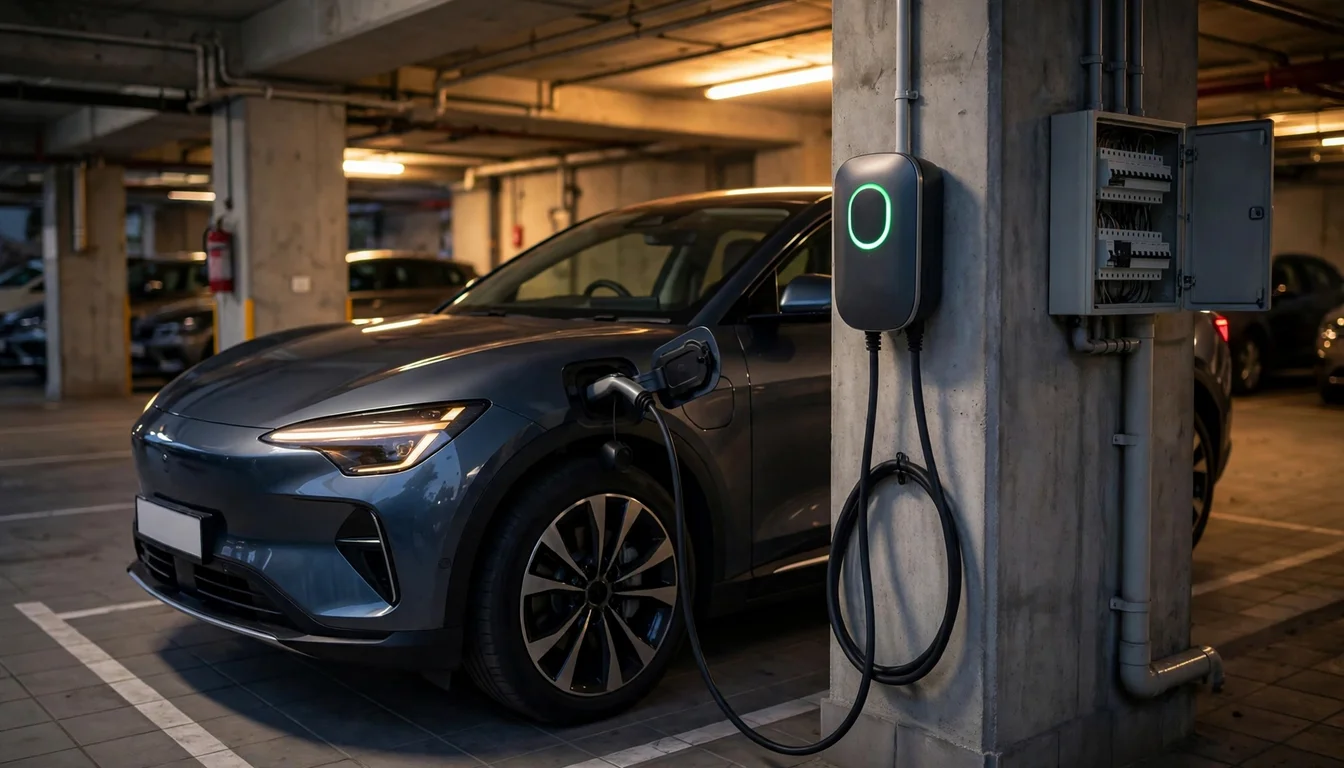
- Typical 7.4 kW setup, all-in — ₹35,000 to ₹55,000: Unit plus copper cabling, MCB/RCBO, earthing, conduit and a few hours of labour. This assumes no load upgrade and a short cable run between your distribution board and the parking spot.
- Complex 7.4 kW installs — ₹40,000 to ₹80,000: Longer cable runs, trenching, civil work, or a DISCOM load enhancement push you up here. Installation labour alone runs roughly ₹8,000–₹25,000 depending on complexity.
- 11 kW three-phase wall box — ₹40,000 to ₹70,000 for the unit: Only relevant with a three-phase connection and a car that accepts 11 kW AC. For most Indian homes this is over-spec.
- Load enhancement fees — ₹500 to ₹12,000: Charged separately by your DISCOM and wildly variable by state. Budget for it if your sanctioned load is 5 kW or below and you want a 7.4 kW box.
- Separate EV meter — roughly ₹3,000 to ₹6,000 one-time: Reported figures; confirm with your DISCOM. Whether it pays is a separate calculation (see the meter section below).
3.3 kW vs 7.4 kW: which one should you actually buy?
This is the decision that matters, and the honest answer depends on your car, not your charger.
Your car's onboard charger sets the ceiling. The wall box is just a safe tap; the car decides how much power to draw. Most EVs sold in India cap AC charging at 7.2 kW. A 22 kW wall box connected to a car with a 7.2 kW onboard charger still charges at 7.2 kW — you have paid for speed you can never use.
Do the overnight math. A portable 3.3 kW charger delivers about 26 kWh in eight hours after charging losses — that covers roughly 150 km of range, more than a normal daily commute. If you drive 40 km a day, you need about 8 kWh back each night, which even the portable unit handles in under three hours. The 7.4 kW wall box earns its keep when you run bigger batteries (a 38 kWh pack goes from near-empty to full overnight instead of over a day and a half), drive long daily distances, or simply want the flexibility to top up quickly between trips.
Safety is the same either way. Both need a dedicated circuit, a correctly rated breaker (MCB with an RCBO/RCCB of the type the charger maker specifies), and proper earthing — especially a 7.4 kW unit pulling a steady 32A for six hours. Extension cords, multi-plug boards and ordinary wall sockets must not carry a car charger for daily use; sustained current heats them, and that is a documented cause of charger fires. A licensed electrician or the charger's installation partner should do the job, and the charger should handshake with your vehicle before they leave.
Buy in the right order. Check the carmaker's bundling first — many 2026 models either include a 7.4 kW wall charger or offer it as a heavily subsidised add-on, sometimes with basic installation for a limited cable run. A bundled unit at the low end of the market can bring a complete 7.4 kW setup down to the ₹25,000–₹40,000 band. Never buy the charger before confirming your parking rights, sanctioned load and society approvals; a wall box with nowhere legal to mount is an expensive paperweight.
The three checks before you spend anything
1. Sanctioned load. A 3.3 kW portable charger works on a standard 3–5 kW residential connection. A 7.4 kW wall box needs a dedicated 32A circuit, and if your sanctioned load is 5 kW or below, expect a load-enhancement application to your DISCOM first — that can take one to three weeks. An 11 kW unit needs three-phase supply. Old wiring plus a small sanctioned load plus a long cable run is the classic recipe for a quote that doubles.
2. Parking and metering reality (flats especially). Three questions decide your route: is your parking slot allotted to you (named or numbered) or open first-come parking? Does your flat's sanctioned load have room? Is the building on individual flat meters or a single-point connection billed to the society? Allotted parking with spare load is the easy case; open or shared parking usually means pushing for a society-run community charger instead.
3. Society NOC. This is the step that trips up most flat owners. Prepare your application the way a committee wants to read it: proof of your allotted parking, the charger's make/model and datasheet with safety certification, a short note from a licensed electrician covering cable route, earthing and circuit protection, the sanctioned load figures, and a written undertaking that you bear all costs, maintenance and liability. The legal picture is moving but incomplete: in Maharashtra, a November 2022 circular from the Registrar of Cooperative Societies requires societies to issue the NOC within seven days if you follow the Chief Electrical Inspector's safety advisory; the Bombay High Court ruled in January 2025 (the Amit Dholakia case) that a society cannot refuse on the ground that "no policy exists"; and the Supreme Court issued notice in February 2026 in the Rachit Katyal case questioning why the Ministry of Power's 2024 guidelines are not being implemented. That matter is still pending, so there is no nationwide statutory right to charge yet. In practice, a society can set reasonable safety conditions but should not refuse on vague grounds — and since fire safety in basement parking is the most common objection, bring your electrician's note to the meeting.
Which meter route — and the slab trap nobody warns you about
Under the Ministry of Power's 2024 guidelines you can charge on your existing connection at the domestic tariff, and DISCOMs must release new connections within 3 days in metros, 7 days in other municipal areas and 15 days in rural areas once your application is complete. You have three metering routes:
- Existing flat meter — domestic tariff: The default. Your charger's units simply add to the monthly bill. The catch: 200–250 kWh a month of extra charging can push you into a higher slab in progressive-slab states like Maharashtra, Karnataka and West Bengal — and the higher rate then applies to all your household usage, not just the car.
- Sub-meter behind your existing connection — EV tariff where available: Karnataka's KERC guidelines allow sub-metering billed at the LT-6(c) EV tariff of ₹4.50 per kWh with no separate fixed charge. Not available in every state; needs DISCOM approval.
- Separate EV connection — dedicated EV tariff: Delhi offers a separate EV connection at ₹4.50 per kWh (LT), reported with no fixed charges, surcharges on top. The one-time cost is roughly ₹3,000–₹6,000.
The separate meter only saves money if your marginal slab rate is higher than the EV tariff. Take a Delhi household already using 400 units a month: its EV units land in the ₹6.50 slab, so moving 250 kWh of charging to the ₹4.50 EV tariff saves about ₹500 a month — the meter pays back in under a year. But a household using only 150 units a month sees its EV units land partly in the ₹3.00 and ₹4.50 slabs, averaging about ₹4.20 per unit — the ₹4.50 EV tariff would cost more. Check where your bill sits before you apply.
What it actually costs to run
Home charging is where the EV economics really live. State domestic tariffs for 2026 run roughly ₹4.50 per kWh in Delhi, ₹5–₹7 in Karnataka, ₹6–₹8 in Maharashtra and ₹8–₹10 in Uttar Pradesh — putting home charging at about ₹0.70 to ₹1.60 per km depending on your state and car efficiency. A Tata Nexon EV doing 40 km a day adds roughly ₹800–₹1,500 to the monthly electricity bill; the petrol Nexon covering the same distance costs about ₹7,000–₹8,000 a month in fuel. At that gap, the charger hardware pays for itself within a few months of ownership. Public DC fast charging is a different product entirely — convenience for highways, not daily fuel — and costs multiples of the home per-km rate.
Frequently Asked Questions
How much does it cost to install an EV charger at home in India?
In 2026, a basic 3.3 kW setup costs ₹15,000–₹40,000 including the dedicated wiring point. A 7.4 kW wall box costs ₹35,000–₹55,000 all-in for a standard install — the unit (₹25,000–₹50,000), copper cabling, MCB/RCBO switchgear, earthing and labour. Complex installs with long cable runs or a DISCOM load upgrade can reach ₹80,000. If your carmaker bundles the wall box, the all-in figure can fall to ₹25,000–₹40,000.
Can I charge my EV from a normal 3-pin socket at home?
Yes, using the portable charger supplied with the car — but only on a good-quality, dedicated 15A socket on its own circuit with proper earthing. It is the slowest option (8–18 hours for a full charge) and strictly no extension leads or power strips: sustained current overheats them and is a leading cause of charger fires. For regular daily charging of a four-wheeler, a Type 2 wall box on a dedicated circuit is far safer and faster.
Do I need a separate electricity meter for EV charging?
No. The Ministry of Power's 2024 guidelines let you charge on your existing connection at the domestic tariff — no new permission needed if the charger fits within your sanctioned load. A separate EV connection (or sub-meter, in states like Karnataka) is worth it only when your marginal slab rate exceeds the EV tariff: roughly ₹4.50 per kWh in Delhi and Karnataka. High-usage households typically save around ₹500 a month; low-usage households can end up paying more per unit than on their domestic slabs.
Can I install my own EV charger at home?
It is not recommended. A 7.4 kW charger pulls a steady 32A for hours, so the installation needs a licensed electrician or the charger brand's installation partner: dedicated circuit, correctly sized cable in conduit, MCB plus RCBO/RCCB protection, tested earthing, and a commissioning test where the charger handshakes with your car. DIY work risks voiding the charger's warranty and creates insurance problems if anything goes wrong.
Can my apartment society stop me from installing a home EV charger?
They cannot refuse on vague grounds, but you do need their NOC and there is no nationwide statutory right to charge yet. In Maharashtra, societies must issue the NOC within seven days under a 2022 circular, provided you follow the electrical safety advisory; the Bombay High Court has ruled that "no policy exists" is not a valid reason to refuse. The practical playbook: confirm your allotted parking and sanctioned load first, apply with the charger's datasheet and an electrician's safety note, and address fire-safety concerns for basement parking head-on. The Supreme Court is currently seized of the question of why the Ministry of Power's 2024 guidelines are not being implemented everywhere.
Sources & References
- EVFY — Home EV Charger in an Apartment or Society: NOC, RWA and Meter Steps Explained: https://www.evfy.in/blogs/how-to-install-home-ev-charger-apartment-society-noc-rwa-meter
- AutoNexa — EV Home Charging India 2026 with Cost, Time & Setup Guide: https://autonexa.com/ev-home-charging-india-2026-with-cost-time-and-setup-guide
- eauto.co.in — Home EV Charging Setup in India 2026: Cost, Installation & Everything: https://eauto.co.in/blogs/cars/home-ev-charging-india-2026-cost-installation-guide
- ev.care — EV Home Charger & Wallbox Installation & Repair in India (2026 Guide): https://ev.care/blog/ev-home-charger-wallbox-installation-repair-india
- Gadgets Now — EV Chargers in India Explained, From Home Wall Boxes to CCS2 Fast Chargers: https://gadgetsnow.indiatimes.com/auto-tech/ev-chargers-in-india-explained-from-home-wall-boxes-to-ccs2-fast-chargers/articleshow/134555404.cms
- Carandbike — Installing an EV Charger at Home: Dos, Don'ts and Everything You Need to Know: https://www.carandbike.com/articles/installing-an-ev-charger-at-home-dos-donts-and-everything-you-need-to-know-3219725