India's electric vehicle market just had its best month ever. According to data released by the Federation of Automobile Dealers Associations (FADA) on October 7, 2026, EV retail sales reached 3,33,634 units in September 2026 — up 74% year-on-year — pushing overall EV penetration across all vehicle categories to roughly 13%, from about 10% a year earlier.
The headline is impressive, but the interesting part is the shape of the growth: it was broad-based, led by the two mass-market segments, and — according to FADA — increasingly driven by buyers' wallets rather than by subsidies. Let's unpack the numbers.
The headline numbers, segment by segment
Four segments, four records or near-records:
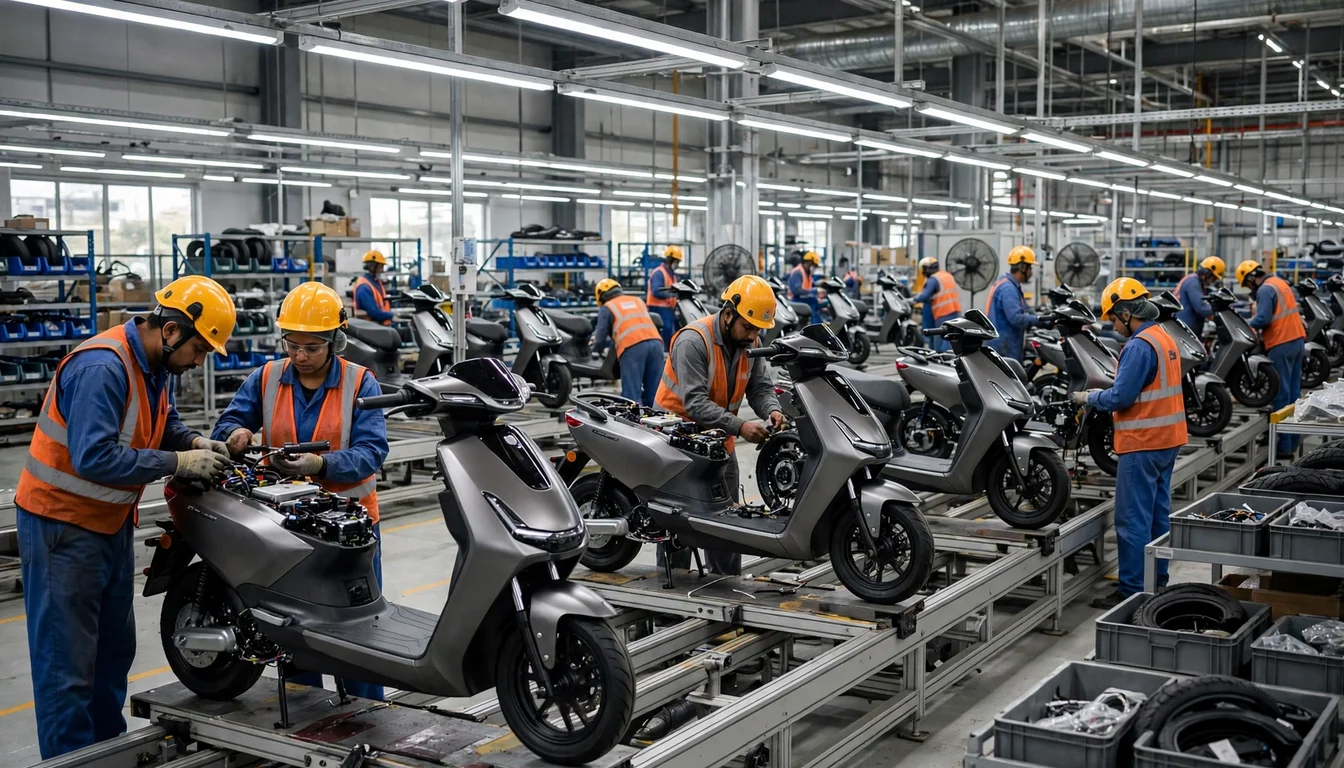
- Electric two-wheelers: 2,07,314 units (+88.67% YoY, +13.16% month-on-month). This is an all-time high for the segment, and penetration rose to 11.6% of all two-wheelers sold, from 8.2% last September. E-2Ws alone accounted for over 62% of all EVs sold in the month.
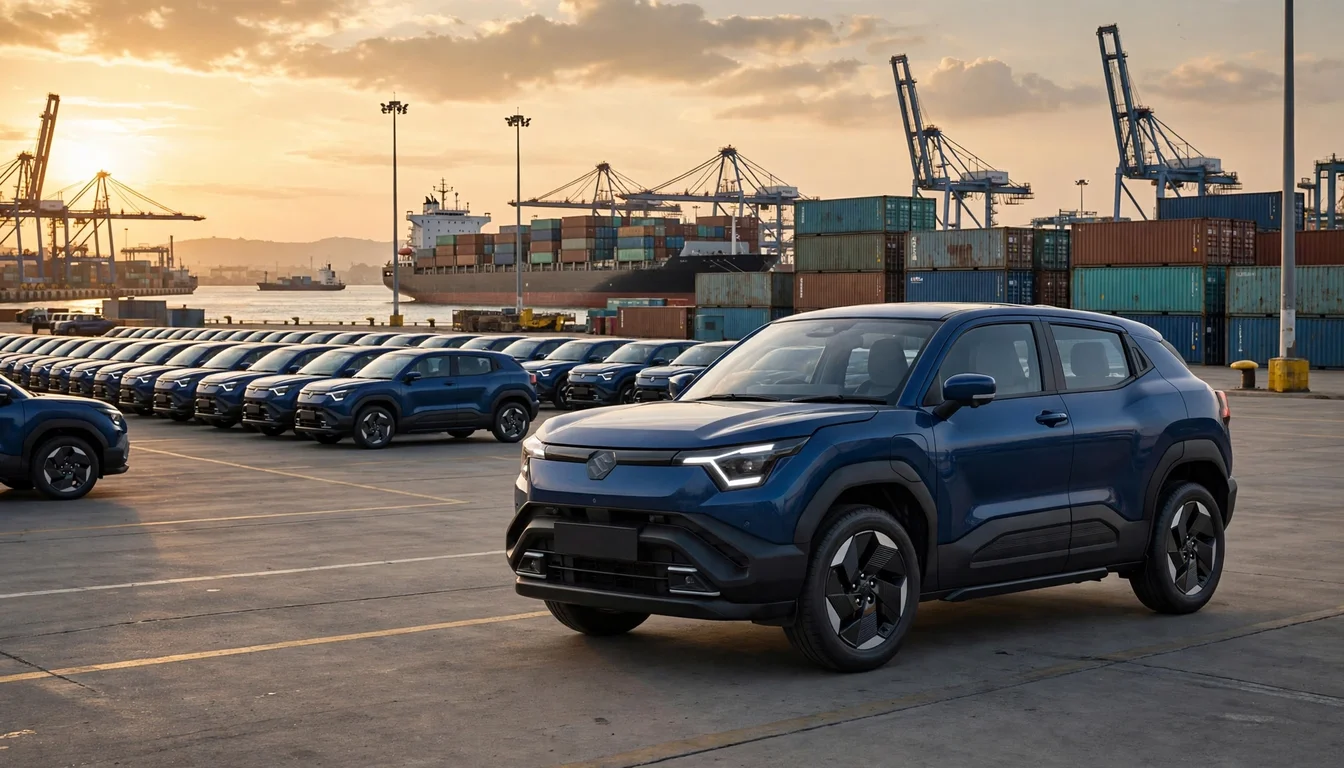
- Electric passenger vehicles: 36,108 units (+94.56% YoY, +17.63% MoM) — also an all-time high, with EV penetration in cars reaching 8.5% (up from 5.7%).
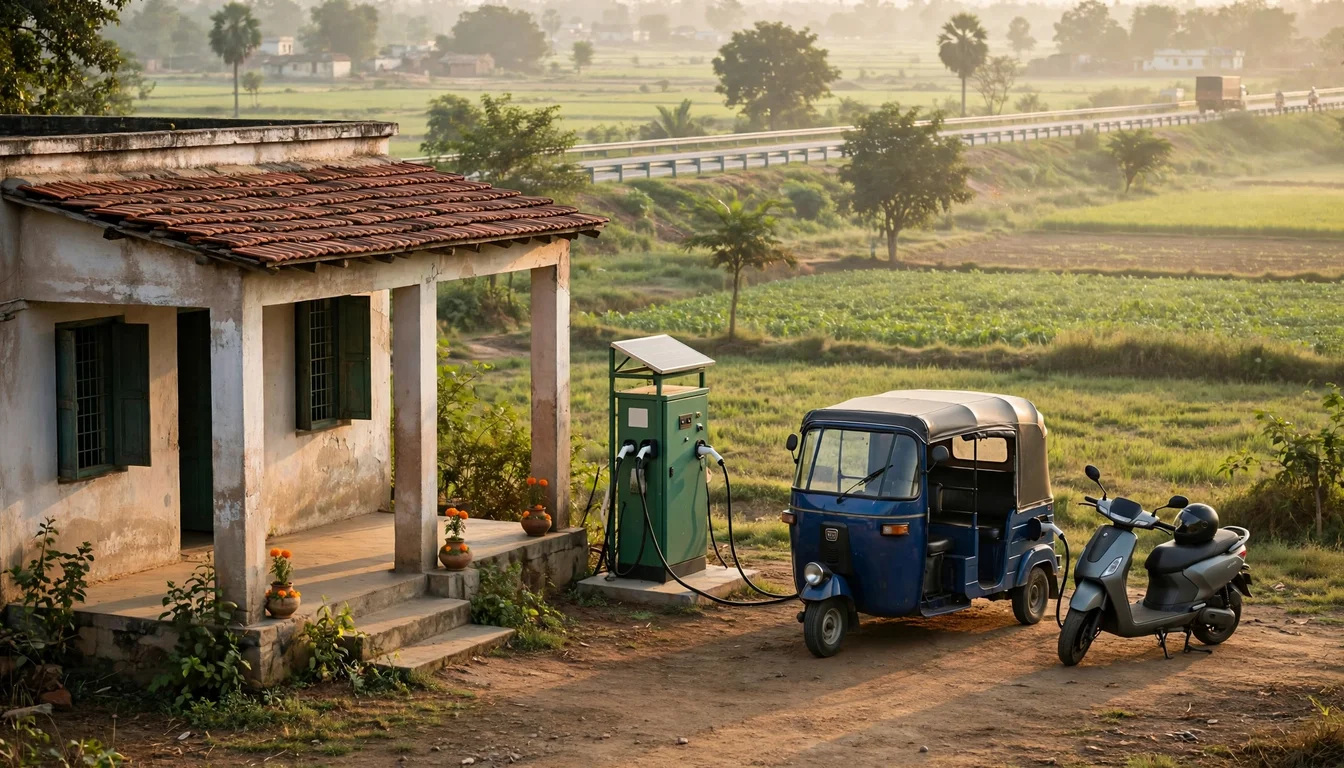
- Electric three-wheelers: 86,024 units (+40% YoY, +7.74% MoM). Penetration held strong at 64.9% — two out of every three new three-wheelers sold in India are now electric.
- Electric commercial vehicles: 4,188 units — more than doubling year-on-year (+158%), though down 10.9% month-on-month. Penetration rose to about 4%, from 2.16% a year ago.
The broader context matters too. Total auto retail — all powertrains — hit 25,36,920 units in September, the best September in Indian auto-retail history (+31.82% YoY). So EVs rode a genuine industry-wide festive wave, not just their own momentum.
FADA president Sai Giridhar made a point worth noting: unlike the broader market, where September's headline growth is partly flattered by a weak year-ago base (GST 2.0 disruptions), the EV number is a clean absolute record — new EVs didn't just grow against last year, they set a new all-time high. He also framed the growth as "demand-led rather than subsidy-led," arguing that electric mobility is becoming a durable part of India's growth story.
What's actually driving the surge
Five forces are converging:
1. Festive demand. September 2026 captured the pre-Diwali buying season, when dealers push stock and buyers time big purchases. Two-wheeler sales overall rose 33.08% YoY, so the seasonal lift was real across the board — but EVs outgrew the market nearly everywhere.
2. Running-cost economics maturing. Giridhar cited "maturing running-cost economics" explicitly. With petrol prices stubbornly high, the per-km cost math of an EV — roughly ₹0.7–1.6/km on home charging versus ₹9–10/km for petrol — increasingly sells itself, especially for high-usage buyers like two-wheeler commuters and fleet operators.
3. Fuel-anxiety spillover. Several reports noted that growing consumer concerns over ethanol-blended petrol and its compatibility with older engines are nudging buyers toward electric options. This is a distinctly Indian demand driver: fuel-composition politics feeding EV adoption.
4. A much wider model shelf. The car segment tells the story best. In September 2026, Indian buyers could choose between the Tata Punch.ev, Mahindra XEV 9S, Tata Nexon.ev, MG Windsor EV, Mahindra XEV 9e, Tata Sierra EV, Tata Curvv EV and Tata Harrier EV — all meaningful-volume products. Five years ago, this shelf barely existed.
5. Policy support. PM E-DRIVE and progressive state schemes continue to underpin demand, even as FADA argues the growth is no longer subsidy-dependent. The truth is probably both: subsidies opened the door, and economics are now doing the pulling.
The model-level fight: 66 units separated #1 and #2
Zoom into electric cars and the competition is getting genuinely interesting. Industry tracker data for September 2026 shows:
- Tata Punch EV — 4,702 units
- Mahindra XEV 9S — 4,636 units (just 66 units behind)
- Tata Nexon EV — 3,926
- MG Windsor EV — 3,300
- Mahindra XEV 9e — 1,975
- Tata Sierra EV — 1,908
- Tata Curvv EV — 1,536
- Tata Harrier EV — 1,452
At the brand level, Tata Motors moved roughly 14,700 EVs — more than Mahindra (7,780) and MG (5,242) combined — and Tata's own EV sales reportedly doubled year-on-year (+100.72%). Mahindra, meanwhile, placed two models in the top five with the XEV 9S and 9e, a remarkable rise for a brand that was a fringe EV player a few years ago.
In two-wheelers, TVS reported 65,799 electric two-wheeler sales in September — up 110% — as legacy manufacturers continue to consolidate the segment. The engineering takeaway: this is no longer a startup-led market. The OEMs with deep service networks and manufacturing scale are the ones setting records, which also explains the improving quality and warranty confidence feeding buyer trust.
What's fragile about this record
Three risks could blunt the momentum in October and beyond:
- A wave of OEM price increases. Dealers are flagging that manufacturers are raising prices, which erodes the affordability that drove this surge. EVs still carry an upfront premium over ICE equivalents; if price hikes outpace the running-cost advantage, fence-sitters will wait.
- Rising dealer inventories. Stock levels are climbing. If retail momentum slows after the festive season while wholesale keeps flowing, dealers will discount — which helps short-term volumes but compresses margins and signals softness.
- Base-effect mathematics. Particle News analysis noted that a low year-ago base from GST 2.0 transition effects magnified some year-on-year rates. The absolute record is real, but don't expect +74% prints every month — the comp base is now much higher.
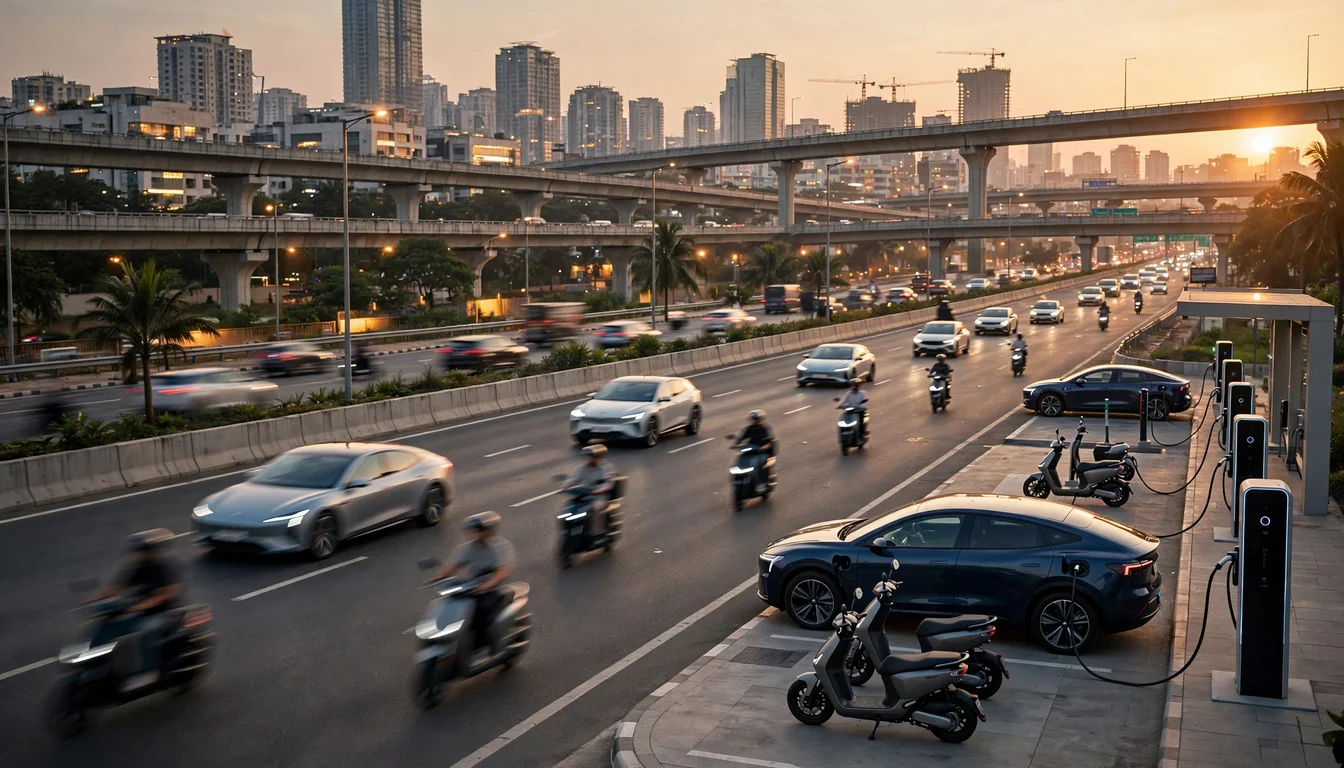
Still, the structural picture is strong: 31,500 chargers were added to India's network in a year, the average charger power rose from 32 to 45 kW, and fleet growth keeps improving charging economics. A record 3.33 lakh new EVs entering the fleet in a single month is, by any measure, an inflection point.
Frequently Asked Questions
Is the 74% growth real, or just a low-base effect?
Mostly real. FADA itself drew the distinction: while the broader auto market's September growth is partly flattered by a weak year-ago base, the EV figure is a clean all-time record — 3,33,634 units beats every previous month in absolute terms, not just against September 2025.
Which electric car sold the most in September 2026?
The Tata Punch EV, with 4,702 units — but the Mahindra XEV 9S was right behind at 4,636, a gap of just 66 units. The Nexon EV (3,926) and MG Windsor EV (3,300) rounded out the top four.
Why is three-wheeler EV penetration (64.9%) so much higher than cars (8.5%)?
Economics. Three-wheelers are commercial vehicles that run 100–150 km a day — at that usage intensity, the fuel-cost saving pays back the EV premium in months, not years. Cars are mostly private, lower-usage vehicles, so the payback math is slower and buyers weigh range and charging anxiety more heavily.
Will October 2026 hold this pace?
Watch three things: post-festive demand normalization, the OEM price increases dealers are flagging, and inventory levels. FADA will release October data in early November. Even a 20–30% step down from September's record would still leave 2026 as India's biggest EV year by a wide margin.
Sources & References
- IBEF — "India EV Sales Surge 74% to Record 3.33 Lakh Units in September" (FADA data summary): https://www.ibef.org/news/india-s-ev-retail-sales-surge-74-to-record-3-33-lakh-units-in-september-fada
- DD India — "India's EV retail sales surge 74% to record 3.33 lakh units in September: FADA": https://ddindia.co.in/2026/10/indias-ev-retail-sales-surge-74-to-record-3-33-lakh-units-in-september-fada/
- ETV Bharat — "India's EV Retail Sales Hit Record 3.33 Lakh Units in September, Up 74% YoY": https://www.etvbharat.com/en/business/indias-ev-retail-sales-hit-record-3-dot-33-lakh-units-in-september-up-74-percent-yoy-enn26100704612
- BioEnergy Times — "India EV retail sales hit record 3.33 lakh units in September, up 74%": https://bioenergytimes.com/india-ev-retail-sales-hit-record-3-33-lakh-units-in-september-up-74/
- Telangana Today — "India EV sales hit record 3.33 lakh units in September, up 74pc YoY": https://telanganatoday.com/india-ev-sales-hit-record-3-33-lakh-units-in-september-up-74pc-yoy
- Particle News — "India Records Highest-Ever Monthly EV Retail Sales as September Surges" (TVS 65,799 e-2W, Tata ~14,791 e-PV, dealer risk commentary): https://particle.news/story/india-records-highestever-monthly-ev-retail-sales-as-september-surges
- Car India News (@carindianews, Instagram, Oct 9 2026) — Top 8 EV cars September 2026 infographic (model-wise volumes): https://www.instagram.com/p/DeRiTu_Eozw/
- C/o.Automobile (@cofautomobile, Instagram, Oct 10 2026) — September 2026 car sales report with PV fuel mix: https://www.instagram.com/p/DeTi-MKlJRy/