The short answer (read this in 30 seconds)
If you are buying an electric scooter or bike in India right now, here is exactly what the central government's PM E-DRIVE scheme gives you:
- The scheme is still live. It was extended to 31 March 2028 (Ministry of Heavy Industries notification, August 2026), so any eligible purchase made now qualifies.
- How much: ₹2,500 per kWh of battery capacity, capped at ₹5,000 per vehicle — or 15% of the ex-factory price, whichever is lower. In practice, most mainstream scooters get the full ₹5,000.
- How it works: no forms, no portal, no waiting. The dealer generates an Aadhaar face-authenticated e-voucher at the time of purchase, and the incentive is deducted directly on your invoice.
- The catch-list: the scooter must be a scheme-approved model priced at or below ₹1.5 lakh ex-factory, use a lithium-ion battery, and only one EV per category per individual qualifies.
- The scheme is much bigger than scooters: ₹11,900 crore total, covering e-buses (14,028 units), e-trucks, e-ambulances, public chargers, and a ₹776.29 crore upgrade of India's vehicle-testing labs announced at the PM E-Drive Dialogue with Industry at ICAT Manesar.
What PM E-DRIVE looks like in 2026
PM E-DRIVE (PM Electric Drive Revolution in Innovative Vehicle Enhancement) launched on 29 September 2024, replacing the short-lived EMPS 2024 scheme. Its original design set 31 July 2026 as the terminal date for electric two-wheeler incentives. On 10 August 2026, the Ministry of Heavy Industries extended the e-2W window to 31 March 2028 and raised the segment's allocation by roughly ₹1,000 crore — from ₹1,772 crore to ₹2,767 crore — covering up to 45,79,120 electric two-wheelers. The programme's total outlay now stands at ₹11,900 crore.
Where the money goes tells you what the government actually wants to happen:
- Electric two-wheelers — ₹2,767 crore: the demand incentive that lands on your invoice. This is the part most buyers interact with.
- Electric buses — ₹4,391 crore: procurement of 14,028 e-buses through state transport undertakings, aimed at replacing ageing diesel fleets on urban routes.
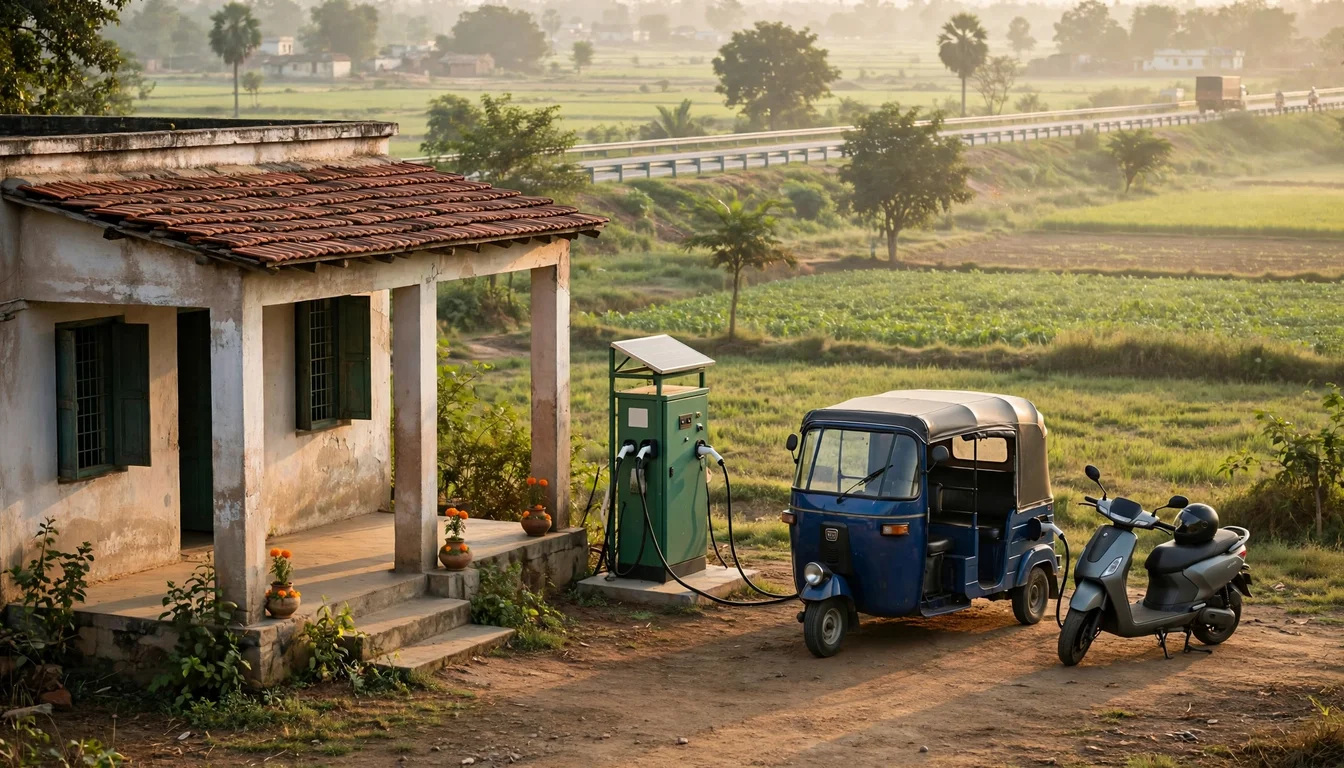
- Public charging stations — ₹2,000 crore: proposals worth ₹729.34 crore have already been approved for 7,254 chargers, with Karnataka (1,571), Delhi (1,146) and Rajasthan (805) leading the state-wise split, alongside oil marketing companies HPCL, BPCL and IOCL.
- Testing agency upgrades — ₹776.29 crore: modernising ICAT Manesar, ARAI Pune, GARC Chennai and NATRAX Indore for EV, battery and clean-tech certification.
- E-trucks — ₹500 crore and e-ambulances — ₹500 crore: smaller but targeted demand incentives for commercial segments.
One segment is already done: the registered e-3W (L5) sub-component hit its sales target and was closed on 26 December 2025. Support for e-rickshaws and e-carts continues until March 2028.
How much you actually save: the numbers by vehicle type
Registered electric two-wheelers — up to ₹5,000. The formula is ₹2,500 × battery capacity in kWh, subject to two caps: a hard cap of ₹5,000 per vehicle, and a softer cap of 15% of the ex-factory price, whichever is lower. Walk through the real cases:
- A scooter with a 1.5 kWh battery: 1.5 × ₹2,500 = ₹3,750 off.
- A scooter with a 2 kWh battery: 2 × ₹2,500 = ₹5,000, which hits the cap — ₹5,000 off.
- A scooter with a 3 kWh or larger battery: the maths says ₹7,500+, but the cap binds — still ₹5,000 off.
Two hard eligibility lines to know before you negotiate: the model's ex-factory price must not exceed ₹1.5 lakh, and it must use a lithium-ion battery. Lead-acid models do not qualify. This is also a per-person benefit — only one EV of a given category per individual, and each mobile number can be used for the incentive only once.
E-rickshaws and e-carts — ₹2,500/kWh, till March 2028. The same per-kWh structure applies. Note the L5 three-wheeler category's separate sub-component already achieved its target and closed in December 2025, so confirm your specific model category with the dealer.
E-trucks — ₹5,000/kWh or 10% of the ex-factory price, whichever is lower. The commercial side is moving from pilots to structured rollout: PM E-DRIVE certification has already been issued to electric truck models from IPL Tech and Tata Motors.
E-ambulances — ₹30,000/kWh or 35% of the ex-factory price, whichever is lower. The highest per-kWh rate in the scheme, reflecting the specialised, low-volume nature of the segment.
E-buses — no buyer voucher. This ₹4,391 crore flows through tenders and state transport undertakings deploying the 14,028 buses, not through showroom discounts.
How the e-voucher claim actually works
The most buyer-friendly part of PM E-DRIVE is that there is almost nothing for you to do. The dealer does the paperwork; your job is verification. The sequence:
- Check the approved-models list on the official portal, pmedrive.heavyindustries.gov.in, before you shortlist a scooter. If your model is not listed, it does not qualify.
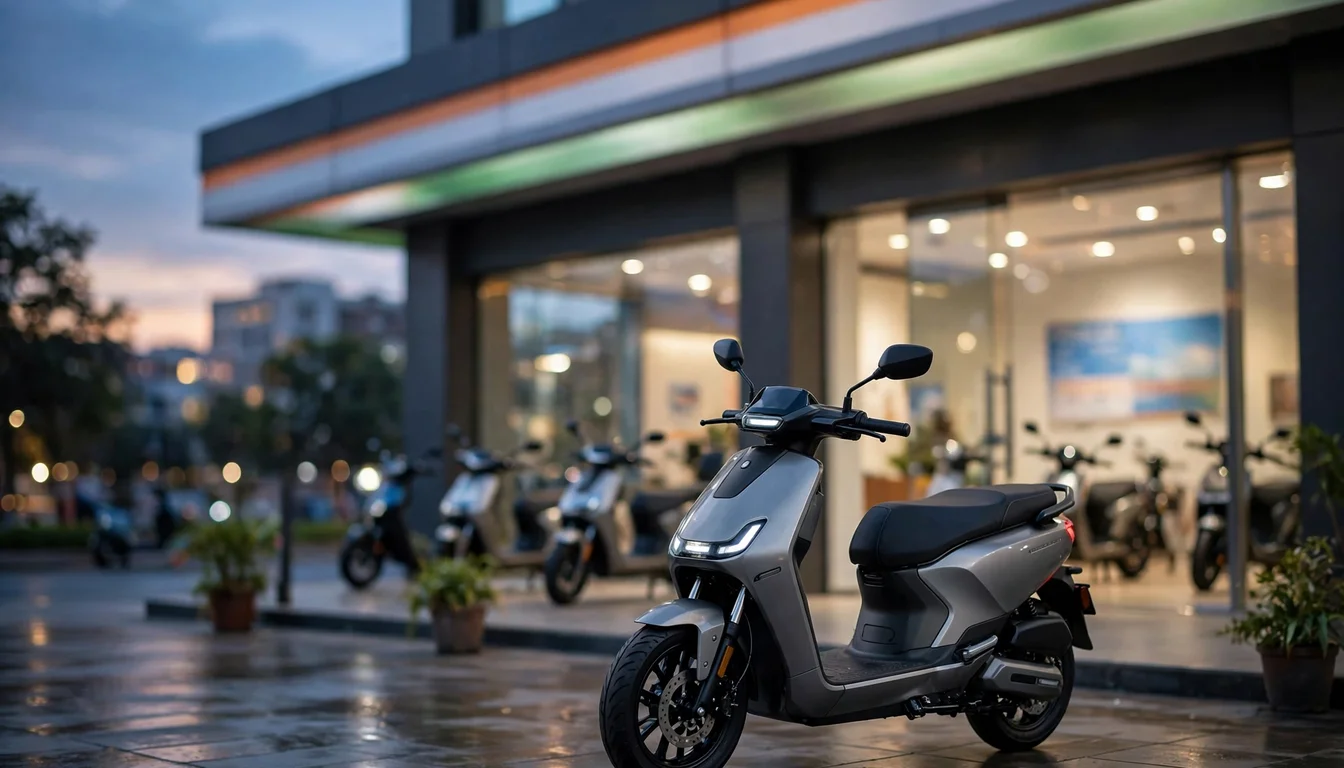
- Buy from an authorised dealer. The incentive only flows through dealers registered on the scheme.
- Complete Aadhaar face-authenticated e-KYC at the time of purchase. This generates the e-voucher on the portal; a download link is sent to your registered mobile number.
- Sign the e-voucher and hand it to the dealer. The dealer countersigns and uploads it on the PM E-DRIVE portal.
- Check your invoice. The central incentive must appear as a deducted line item. If it does not, ask specifically before you pay — the dealer's obligation is to pass it through.
Three pitfalls worth knowing: vehicles bought by central or state government departments are excluded; private, corporate and commercial buyers are all otherwise eligible; and do not let a dealer promise to "adjust it later" — the voucher is generated at the point of purchase, not after the fact. The scheme operates within its ₹11,900 crore budget envelope: if a component's allocation is exhausted before March 2028, that component stops accepting new claims.
The two parts of PM E-DRIVE most buyers never notice
Testing labs. At the PM E-Drive Dialogue with Industry held at ICAT Manesar (as part of the agency's 20th anniversary programme, presided over by Heavy Industries Minister H D Kumaraswamy), the government disclosed a ₹776.29 crore upgrade for ICAT, ARAI, GARC and NATRAX. The new kit includes four-wheeler chassis dynamometers, battery cell cyclers for accelerated life evaluation, and EMI/EMC testing laboratories — meaning the range figures, battery-durability claims and safety certifications on the spec sheet are tested against harder, modernised protocols rather than legacy ones.
Charging. The ₹2,000 crore charging-infrastructure component targets 22,100 fast chargers for electric four-wheelers, 1,800 for e-buses and 48,400 for electric two- and three-wheelers.
The early returns are visible in the penetration data disclosed at the same dialogue: electric two-wheelers reached 9.9% of the segment during April–August FY27, up from 6.6% in FY26, while electric L5 three-wheelers crossed 46.1%, up from 31.7%.
Frequently Asked Questions
Is the PM E-DRIVE subsidy still available for electric scooters in 2026?
Yes. The 10 August 2026 amendment extended the registered e-2W incentive framework through 31 March 2028. Any eligible electric scooter or bike purchased from an authorised dealer before that date qualifies, subject to available funds.
Is the PM E-DRIVE subsidy exactly ₹5,000?
No. ₹5,000 is the maximum. The notified rate is ₹2,500 per kWh of battery capacity, and the final amount is the lowest of three numbers: the battery-capacity calculation, the ₹5,000 per-vehicle cap, and 15% of the ex-factory price. A 1.5 kWh scooter gets ₹3,750; most 2 kWh+ scooters get the full ₹5,000.
What is the maximum ex-factory price for an eligible electric scooter?
₹1.5 lakh. Any registered e-2W priced above that ex-factory is outside the scheme regardless of its battery size.
Can one person claim the subsidy on two electric scooters?
No. Only one EV of a specific category per individual qualifies, and each mobile number can be used for the incentive only once. A second scooter in the same category does not get the incentive.
Can I combine the PM E-DRIVE subsidy with my state's EV incentive?
Yes, in most cases. PM E-DRIVE is the central programme; state EV policies run separately and do not block each other. State incentives usually need a separate application under that state's policy, so check your state's current EV policy for eligibility and timelines.
Sources & References
- Press Information Bureau — PM E-DRIVE scheme document (October 2026): https://static.pib.gov.in/WriteReadData/specificdocs/documents/2026/oct/doc1006220261001_19244601.pdf
- Autocar Professional — "Govt Extends PM E-Drive E2W Subsidy Till FY28, Hikes Outlay" (August 2026): https://www.autocarpro.in/news/govt-extends-pm-e-drive-subsidy-for-e2ws-till-fy28-increases-allocation-134036
- The Hindu BusinessLine — "Electric two-wheeler penetration nears 10%; Centre allocates ₹776 crore to upgrade EV testing infrastructure": https://www.thehindubusinessline.com/economy/electric-two-wheeler-penetration-nears-10-centre-allocates-776-crore-to-upgrade-ev-testing-infrastructure/article71509522.ece
- NDTV Auto — "PM E-DRIVE: e-2W Penetration Nears 10%, e-3W L5 Crosses 46% As EV Adoption Gathers Pace": https://www.ndtv.com/auto/pm-e-drive-e-2w-penetration-nears-10-e-3w-l5-crosses-46-as-ev-adoption-gathers-pace-12096489
- BikeLeague — "Electric Scooter Subsidy in India in 2026: Schemes & Benefits": https://www.bikeleague.in/motorcycle-articles/motorcycle-featured-articles/electric-scooter-subsidy-in-india-schemes-and-benefits/
- EV Calculator India — "PM E-DRIVE Subsidy 2026: Eligibility": https://evcalculator.in/blog/ev-subsidies/pm-e-drive-subsidy-2026-eligibility-5-000-cap-e-voucher-calculator.html