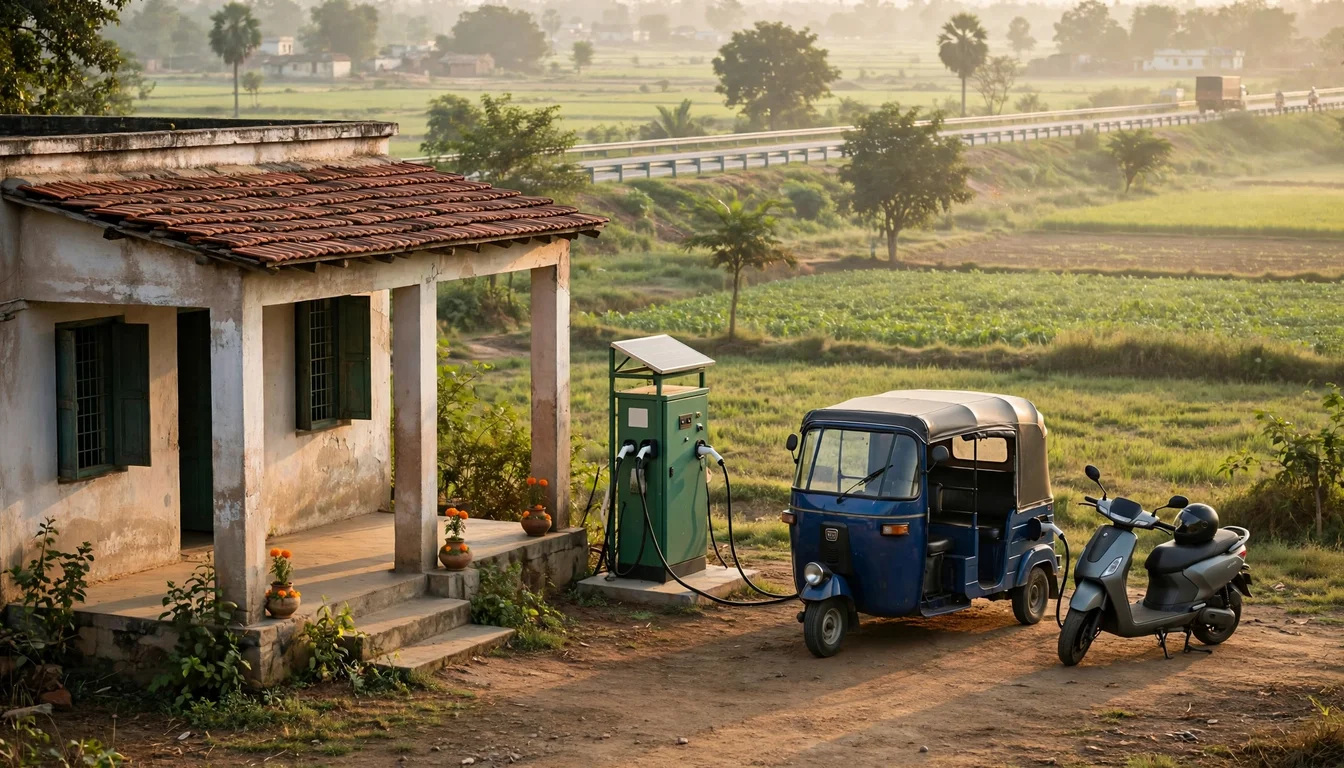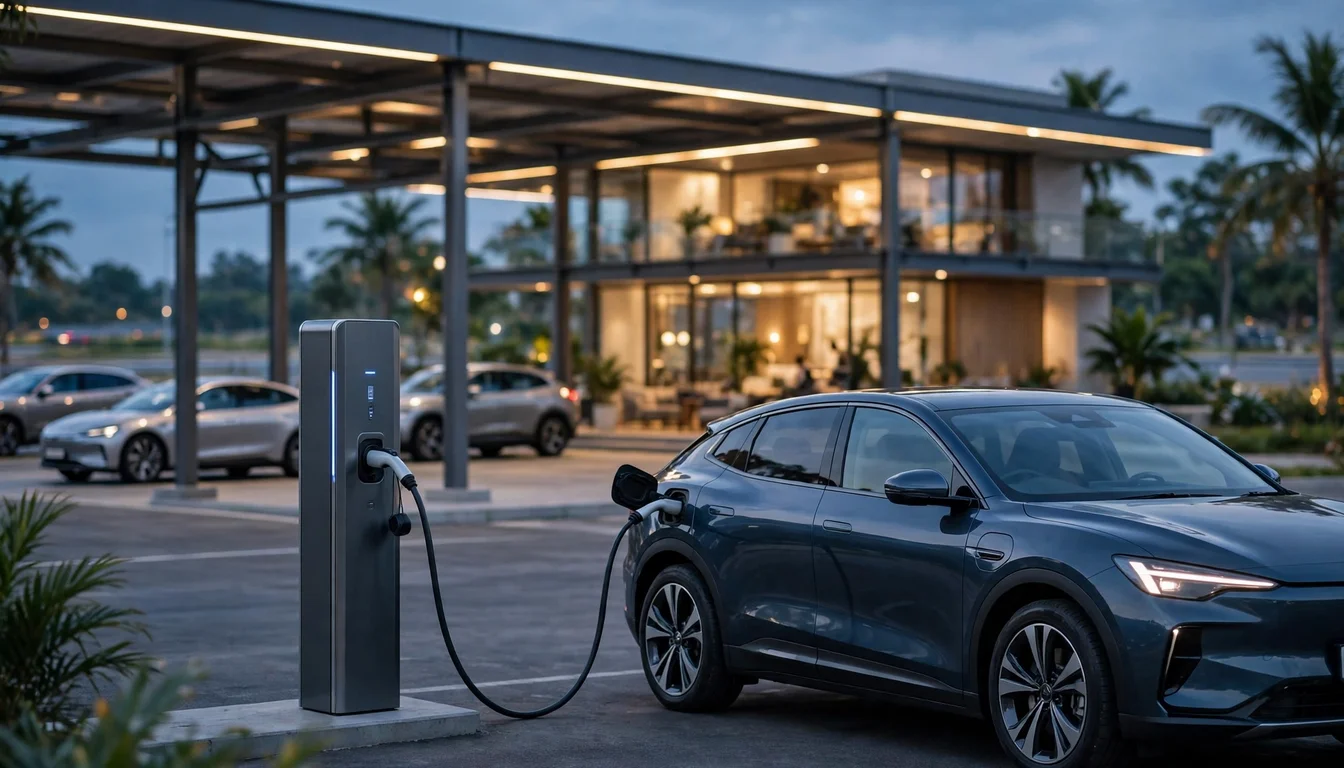
TATA.ev's MegaCharging network has crossed 1,000 live charging connectors across 200 cities and 180 highway corridors in India, the company confirmed in October 2026. It is a useful milestone for intercity EV trips — but not quite what the headline suggests, and the difference matters before you plan a route around it.
- What crossed 1,000: charging connectors, not charging sites. One site can hold several connectors.
- Coverage: 200 cities and 180 highway corridors, with 40 MW of installed capacity and 32 million electric kilometres powered so far.
- Speed: a minimum of 120 kW DC at MegaCharger locations, with some hubs far higher.
- Who can use it: any EV with a compatible connector, not only Tata cars. Tata owners get up to 25 percent off the tariff and priority access.
- The catch: there is no single published national MegaCharger tariff. Prices vary by site and operator, so check the live tariff in the app before you set off.
What the 1,000-connector milestone actually means
A connector is one charging point — one plug a car can use at a time. A site, or hub, contains several of them. So "1,000 connectors" does not mean 1,000 separate locations, and counting it that way would badly overstate how close the next charger is on any given road.
What the number does show is scale, built fast. TATA.ev launched the MegaCharger initiative in February 2025 with operators including Tata Power, ChargeZone, Statiq and Zeon, aiming to operationalise 500 MegaChargers in the first phase. By October 2026 it reports coverage from Amritsar in the north to Thoothukudi in Tamil Nadu in the south — about 2,570 km — and from Dwarka in Gujarat to Murakati in Jharkhand in the east, about 1,800 km. Maharashtra leads with 52 charging points, followed by Karnataka with 44 and Tamil Nadu with 32, and total installed capacity is 40 MW.
The company calls it India's largest carmaker-led EV charging network. That is about who built it, not about total charger numbers in India, where Tata Power alone operates a much larger overall network. For a driver, the question is narrower: is there a fast, working charger on the specific road you drive?
How fast is a MegaCharger, really?
Every MegaCharger location offers a minimum of 120 kW DC fast charging. That is the floor, and your car's own peak charging rate decides how much of it you actually use. A car that can only accept 50 kW will charge at 50 kW even on a 400 kW charger.
- Standard MegaCharger — 120 kW minimum: the baseline across the network.
- Higher-capacity hubs — 240 kW to 360 kW site capacity: total power split across multiple bays, so several cars can charge at once.
- Vadodara flagship — 400 kW: the Shreenath Food Hub station on the Mumbai-Ahmedabad highway can charge up to six vehicles at once and is claimed to add up to 150 km of range in 15 minutes for a compatible car.
- Khalapur, Mumbai-Pune Expressway — 720 kW total: five dispensers with 10 charging points, up to 360 kW in Boost Mode to a single vehicle.
- Manned hubs — at least 120 kW per site: the 14 fully manned MegaChargers across Andhra Pradesh and Telangana, run with Voltran, are spaced 100 to 170 km apart and are claimed to take many cars from low charge to 80 percent in roughly 30 to 40 minutes.
That 30-to-40-minute figure comes with a caveat: charging slows sharply after about 80 percent as the battery management system tapers power to protect the pack. Plan highway stops as 20-to-80-percent stops, and the speed claim holds up. Plan them as full charges, and it will not.
What it costs, and how Tata owners save up to 25 percent
TATA.ev does not publish one national MegaCharger tariff, because different operators run different sites and tariffs vary by location and state electricity costs. Anyone quoting a single "MegaCharger price per kWh" for all of India is guessing.
- Tata owner discount — up to 25 percent off the tariff: exclusive to TATA.ev customers, applied through a unique coupon code (see below).
- Priority access — for Tata owners: at participating locations, which matters most at a busy highway hub on a holiday weekend.
- Typical public DC fast-charging tariff in India — roughly Rs 12 to Rs 25 per kWh: the range reported across major networks. Check the live tariff for your exact site.
- What that means per kilometre — an illustration, not a tariff: a car using about 14 kWh per 100 km costs about Rs 2.80 per km at Rs 20 per kWh, and about Rs 2.10 per km with the full 25 percent Tata discount. At home rates of roughly Rs 7 per kWh, the same car costs about Rs 0.98 per km — which is why highway charging should be a top-up strategy, not your everyday fuel.
To budget a trip, take the live tariff for your site, multiply it by the kilowatt-hours you plan to add (roughly 60 percent of your battery for a 20-to-80-percent stop), and apply the 25 percent discount only if you are a Tata owner with an activated code. A 40 kWh battery taking a 24 kWh top-up at Rs 20 per kWh costs Rs 480, or Rs 360 with the Tata discount.
How to find and use a MegaCharger
- Find it in the iRA.ev app, or a partner app: Tata Power EZ Charge, Zeon, Statiq, ChargeZone and Shell all list participating locations.
- Check live status, not just location: a pin on a map is not a working charger. Confirm the connector is available and what power it offers before you commit to that stop.
- Tata owners, activate the discount first: generate a unique coupon code using your registered mobile number and your VIN, printed on your registration certificate or the driver-side B pillar, and enter it in the partner operator's app. The same code works across partner apps.
- At manned hubs, you may not need an app at all: they accept cash, card and UPI directly, with staff on site around the clock — useful for first-time drivers, rental cars and out-of-state travellers.
- Charge to 80 percent and move on, unless you genuinely need the extra range to reach the next working charger.
The discount is "up to" 25 percent, so do not budget the full saving until you see it applied. And priority access does not reserve you a plug — on festival weekends, arrive with enough charge to reach a second site if the first is full.
Where coverage is strongest, and where the gaps remain
- Delhi-Jaipur highway — chargers roughly every 60 km: four Statiq sites covering the 270 km stretch, at Gurugram, Kaprivas, Hamzapur and Shahpura.
- Mumbai-Ahmedabad highway — every 150 to 200 km: three ChargeZone sites including the 400 kW Vadodara flagship, Vapi and Ghodbunder.
- Mumbai-Pune Expressway — 720 kW Khalapur hub: a food-mall location with dining, restrooms and retail.
- Southern corridors — manned hubs 100 to 170 km apart: connecting Hyderabad to Vijayawada, Tirupati and Bengaluru and the NH16 coastline.
- Yamuna Expressway — four hubs between Greater Noida and Agra, and Shell partnership — 21 hubs across Bengaluru, Chennai, Mysuru, Pune and Vadodara.
The gaps are real: the north-east, smaller state highways and remote tourist routes are thinly covered compared with the Mumbai-Delhi-Bengaluru triangle, and ten connectors at one food mall do not help a driver 200 km away. The plan for 500 MegaCharger sites within 400,000 charging points by 2027 is an ambition, not a delivered network. Judge it by the sites on your route, not the national total.
If you drive a Tata EV and regularly travel between cities, this is now a genuine ownership advantage. If you drive another brand, the network is still usable — open to all EVs with compatible connectors, overwhelmingly CCS2 for cars — but you pay full tariff with no priority. If you are still deciding whether to buy an EV, highway charging on the busiest corridors is now a staffed, priced reality; buy if your regular routes are covered, and keep home charging as your primary plan if they are not.
Frequently Asked Questions
What is a TATA.ev MegaCharger?
A high-speed public charging location in TATA.ev's network, built with partners such as Tata Power, ChargeZone, Statiq, Zeon and Shell. Every location offers at least 120 kW DC fast charging, selected hubs offer much higher site capacities, and many offer lounges, food, restrooms and staffed help. The network crossed 1,000 live connectors across 200 cities and 180 highway corridors in October 2026.
Can non-Tata electric cars use Tata MegaChargers?
Yes. The network is open to all EVs with a compatible connector — for most cars in India, CCS2. Non-Tata owners pay the full site tariff and get no priority access, but can use the same chargers, lounges and, at manned hubs, the same cash, card and UPI payment options.
How much does it cost to charge at a Tata MegaCharger?
There is no single national tariff, as different operators run different sites. Expect roughly Rs 12 to Rs 25 per kWh, the range reported for public DC fast charging in India. Check the live tariff for your exact site in the iRA.ev app or the operator's app before travelling. Tata owners get up to 25 percent off through a coupon code.
How do Tata owners get the 25 percent MegaCharger discount?
Generate a unique coupon code using your registered mobile number and your VIN, found on your registration certificate or the driver-side B pillar, and enter it in the partner operator's app (Tata Power, Zeon, Statiq, ChargeZone or Shell). The same code works across partner apps. If it fails, double-check the mobile number and VIN before contacting support.
How long does charging take, and how do I find a MegaCharger?
At higher-capacity hubs, a top-up from low charge to about 80 percent takes roughly 30 to 40 minutes for a compatible car, depending on peak charging rate, battery size, temperature and starting charge. Find one via the TATA.ev iRA.ev app or a partner app, check live availability and tariff before setting off, and keep a second site in mind on festival weekends.
People also search for
- Tata MegaCharger near me
- Tata MegaCharger locations in India
- Tata MegaCharger charging cost per kWh
- Tata MegaCharger discount for Tata EV owners
- Tata MegaCharger vs Tesla Supercharger India
- Tata Power EZ Charge app
- EV charging cost per km in India
- Home EV charger installation cost in India
Sources & References
- Fortune India — TATA.ev's MegaCharging Network Hits 1,000 Connectors Across 200 Cities in India — https://www.fortuneindia.com/auto/tataevs-megacharging-network-crosses-1000-connectors-across-200-cities/166199
- CarToq — Tata Motors' MegaCharger Network Hits 1000 Fast Charging Points Across India — https://www.cartoq.com/car-news/tata-megacharger-network-1000-charging-points-india/
- TATA.ev — Tata EV Mega Chargers: Fast Charging Stations and Network Locations — https://ev.tata.cars/content/tml/ev/in/en/tata-ev-mega-chargers.html
- Tata Power — Tata Power and Tata Passenger Electric Mobility Ltd. Unveil India's Largest TATA.ev MegaCharger Hub on World EV Day — https://www.tatapower.com/news-and-media/media-releases/tata-power-and-tata-passenger-electric-mobility-limited-unveil-indias-largest-tata-ev-megacharger-hub-on-world-ev-day
- CarToq — No App Needed To Charge At These 14 New 'Manned' Tata Megachargers — https://www.cartoq.com/car-news/tata-ev-opens-14-manned-fast-charging-stations-andhra-pradesh-telangana/
- Moneycontrol — Tata.ev, Shell open 21 fast-charging hubs across 5 cities; offer 120kW chargers, tariff discount for EV owners — https://www.moneycontrol.com/automobile/tata-ev-shell-open-21-fast-charging-hubs-across-5-cities-offer-120kw-chargers-tariff-discount-for-ev-owners-article-13841540.html